 Skip to content

Is a Louisiana Medical Review Panel Required Before You Sue a Doctor?
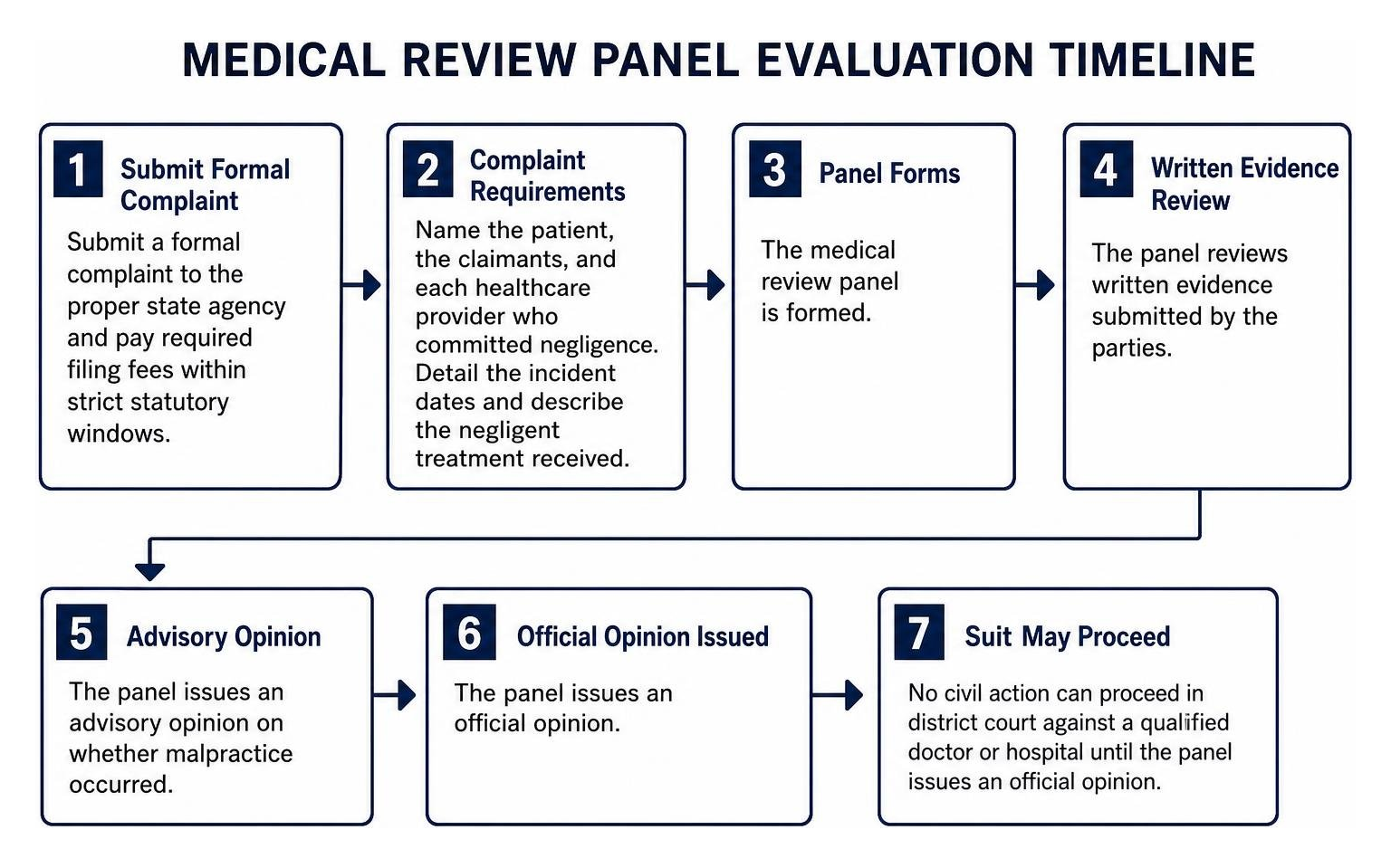
Yes. Louisiana generally requires a medical review panel before a malpractice lawsuit against a qualified health care provider can proceed. If you are asking, “Do I Need a Medical Review Panel Before Suing a Doctor in Louisiana?” the answer is usually yes. A Baton Rouge claimant should act quickly to protect filing deadlines.
Under Louisiana Revised Statutes § 40:1231.8, a civil action against a qualified doctor or hospital generally cannot proceed until the panel issues an opinion. The Louisiana Medical Malpractice Act uses this step to evaluate the claim before litigation. Filing too early can lead to dismissal without prejudice.
The requirement applies when the provider is qualified under Louisiana’s medical malpractice system. Confirming provider status early helps determine whether the panel process is required and which filing route applies. This distinction matters at the start of a claim.
How Do You Start a Medical Review Panel Claim in Louisiana?
To start a medical review panel claim, file a written request with the proper Louisiana agency, identify each provider, and meet the fee deadline in the agency notice. The panel later reviews written evidence and issues an advisory opinion. Missing an early procedural step can put the claim at risk.
The request should identify the patient, claimants, and each provider accused of negligence. It should also describe the treatment and relevant dates. Records from Baton Rouge facilities such as Our Lady of the Lake Regional Medical Center or Baton Rouge General may help establish the timeline.
For private qualified providers, the filing fee is generally $100 per named defendant and is due within 45 days of the confirmation notice. A claimant may qualify for a waiver with the required court order or physician affidavit. The National Practitioner Data Bank reports medical malpractice payment data for Louisiana, offering a federal source for statewide context.
| Claim Feature | Private Healthcare Providers | Public / State Healthcare Providers |
|---|---|---|
| Governing Statute | La. R.S. § 40:1231.8 (LMMA) | La. R.S. § 40:1237.2 (MLSSA) |
| Filing Agency | Louisiana Patients’ Compensation Fund (PCF) | Louisiana Division of Administration |
| Filing Fee | $100 per qualified named provider | $100 per qualified state provider |
| Payment Deadline | 45 days from confirmation notice | 45 days from confirmation notice |
| Panel Composition | 3 private licensed physicians, 1 attorney chair | 3 state-qualified physicians, 1 attorney chair |
The panel generally has 12 months after the attorney chair is selected to issue an opinion unless a court grants an extension. Once that process ends, the claimant may pursue a lawsuit in state district court. A medical malpractice lawyer can help track each administrative deadline.
How Are Panel Members Selected and Evidence Evaluated?
A medical review panel includes three licensed Louisiana health care providers and a nonvoting attorney chair. The claimant and provider each select one physician panelist within statutory time limits. Those physicians select the third panelist, while the parties choose an attorney chair or use the available selection process.
Once formed, the panel reviews written evidence from both sides. Materials may include medical records, deposition transcripts, medical literature, and physician affidavits. Its written finding addresses whether the evidence supports a failure to meet the standard of care.
A clear evidence package can make the panel process easier to evaluate. It should organize relevant records, identify the claimed breach of care, and explain how the injury occurred. The panel does not award damages, but its opinion can shape later litigation and settlement discussions.
The initial filing does not decide whether malpractice occurred. It starts a process for evaluating the record and obtaining an advisory opinion before court litigation. Keeping copies of the request, confirmation notice, fee payment, and supporting records can help avoid later disputes about compliance.
The private-provider and public-provider procedures have similar panel features, but the governing statutes and filing agencies differ. The table above provides a general comparison, not a substitute for reviewing the correct procedure for the provider involved. Accurate provider identification is important when more than one facility or clinician is named.
When Can You Bypass a Louisiana Medical Review Panel?
You may bypass a Louisiana medical review panel only in limited situations. Examples can include claims against nonqualified providers, ordinary premises cases such as a hospital slip and fall, and intentional torts such as battery. Whether an exception applies depends on the facts and the provider’s qualification status.
A doctor or hospital that did not enroll in the Louisiana Patients’ Compensation Fund may be nonqualified, which can change the required process. General negligence claims unrelated to professional treatment may also fall outside the Act. Some surgical error cases involve both qualified providers and nonqualified product manufacturers.
Because classification can be disputed, the facts should be reviewed before deciding to bypass the panel. A misclassified claim may be delayed by a prematurity challenge in court. Documentation often determines that classification.
What Happens If You Sue Before the Panel Process Ends?
If you sue before completing a required panel process, the defense may file a dilatory exception of prematurity. A district court can dismiss the lawsuit without prejudice because the administrative step was not completed. That dismissal may still create serious timing problems for the claimant.
Premature lawsuits can create avoidable legal risk. If a case is dismissed after a filing deadline expires, the right to seek compensation may be lost. Careful timing is especially important for claims filed in the 19th Judicial District Court in East Baton Rouge Parish.
Dismissal without prejudice does not always eliminate the time-pressure problem. The remaining prescription period may be short, so prompt legal advice can matter. Court procedures do not pause themselves.
How Do a Panel Opinion and Louisiana Filing Deadlines Affect Your Lawsuit?
A panel opinion is advisory, so it does not decide the lawsuit or prevent a claimant from filing in court. A timely panel request suspends prescription while the process is pending. After notice of the opinion or dismissal, Louisiana law provides an additional period to institute suit.
The panel’s certified report may be admitted as evidence, but the judge and jury are not bound by it. Either side may subpoena physician panelists to testify about their findings. The panel’s opinion is evidence, not a final verdict.
Louisiana Revised Statutes § 9:5628 generally sets a one-year period from the act or discovery, subject to a three-year outer limit. Attorney J. Doran’s insight is that early record review and deadline tracking can help preserve a client’s options. If a unanimous panel finds no breach, a claimant who files suit may need to post a bond for panel costs.
The filing clock can depend on the date of the alleged malpractice, the date of discovery, the provider’s status, and the panel’s notice. Those facts should be reviewed before a claim is filed in Baton Rouge or another Louisiana court. Waiting until the deadline is close can make an otherwise valid claim harder to protect.
A panel request is not a substitute for monitoring every deadline. Notice dates, provider status, and the remaining prescriptive period can affect when a lawsuit must be filed. Keep copies of agency correspondence and certified-mail receipts in case timing later becomes disputed.
A written timeline can help identify deadlines.
Frequently Asked Questions About Louisiana Medical Review Panels
These common questions explain how the panel process affects a Louisiana medical malpractice claim.
How much does it cost to file a medical review panel request in Louisiana?
For private qualified providers, the fee is generally $100 per named defendant and is due within 45 days of the confirmation notice. A claimant facing financial hardship may seek a waiver with the required court order or physician affidavit.
How long does the entire Louisiana medical review panel process take?
The panel generally has 12 months from the selection of the attorney chair to issue an opinion. The process can take longer if a district court grants an extension for good cause.
Can I sue my doctor in court if the medical review panel rules against me?
Yes. The panel opinion is nonbinding evidence, and a claimant may still file in state district court within the applicable post-panel deadline. A cost bond may be required when all three panelists find no negligence.
Does filing for a medical review panel freeze the deadline to sue?
Yes. A timely panel request suspends prescription for the providers and joint defendants covered by the claim. After certified notice of the opinion or dissolution, the remaining prescriptive period resumes with the additional statutory filing period.
For a case-specific assessment, Doran & Cawthorne reviews the treatment timeline, provider status, and applicable Louisiana deadlines. Early review can prevent avoidable procedural mistakes and preserve important legal options.
These answers provide a general overview rather than legal advice for a particular injury. Medical records, provider qualification, and the timing of the alleged malpractice can change the analysis. A tailored review can identify the deadlines and filing steps that apply to a specific claim.
This is important when several providers or facilities were involved in care.
Share this Blog

When You Need Real Talk & Results™
Louisiana Personal Injury Attorneys Committed to Advocating on Your Behalf

