 Skip to content

Animal Control Bite Claims in Baton Rouge Made Simple
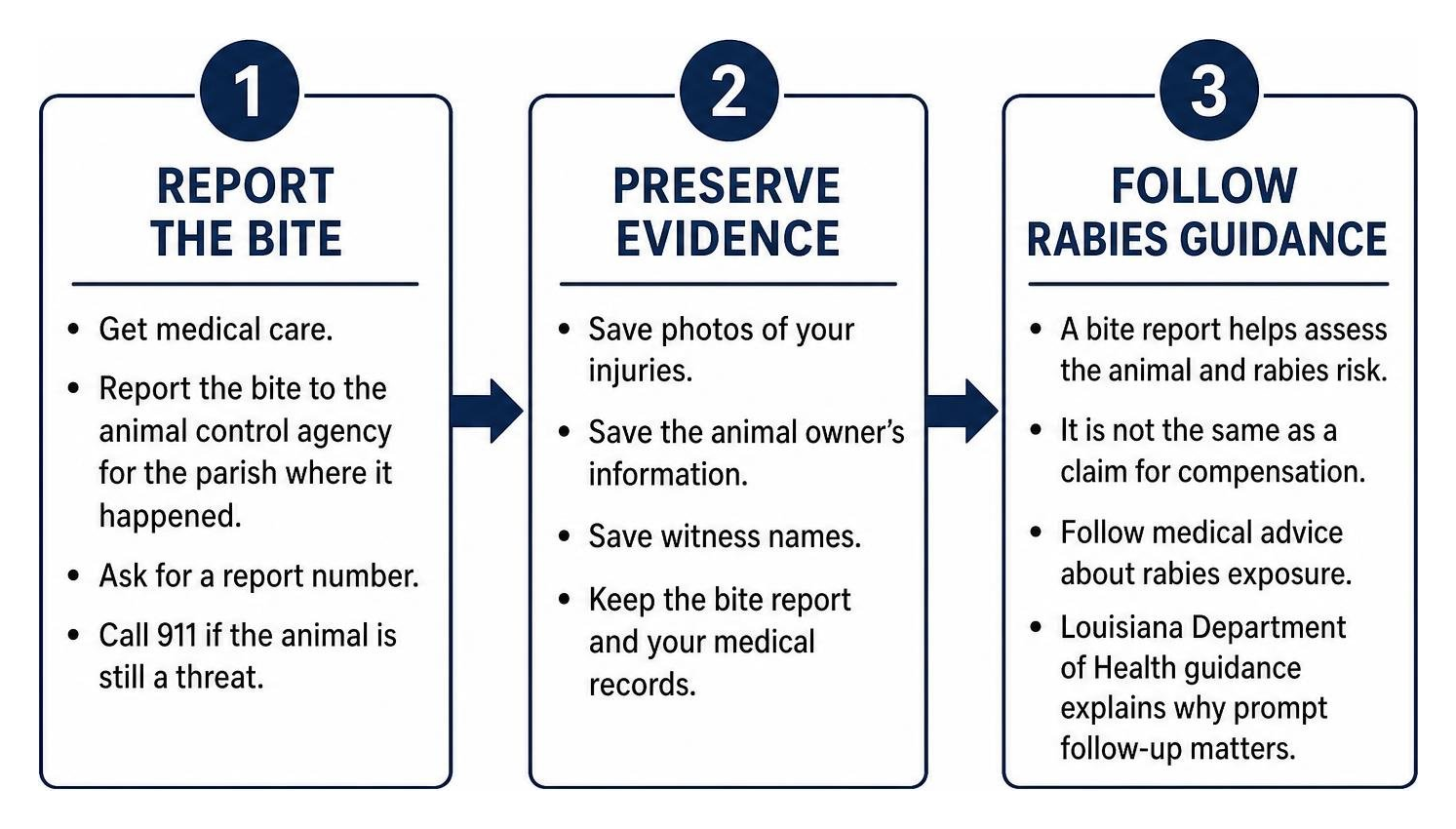
To file animal control bite claims in Baton Rouge, get medical care first, then report the bite to parish animal control, ask for a report number, and save photos, owner details, and witness names. Call 911 if the animal is still a threat to you or others nearby.
East Baton Rouge and West Baton Rouge each run their own animal control agencies that handle bite response and rabies containment. A bite report helps officials assess the animal, but it is not the same as a claim for compensation.
Follow medical advice about rabies exposure. The Louisiana Department of Health’s rabies guidance explains why prompt follow-up matters. According to the Louisiana Department of Health, animal bites remain a leading cause of rabies exposure evaluation in the state, with hundreds of residents receiving post-exposure treatment each year.
I’m Pride Doran, a Louisiana trial lawyer with more than 20 years of experience handling personal injury claims. With animal control bite claims, I look at the report alongside medical records and other evidence to understand what happened and who may be responsible. Call our office today to discuss your options.
How Do You File Animal Control Bite Claims in Baton Rouge?
To file an animal bite report, contact parish animal control immediately after receiving medical care. Provide dispatchers with the incident location, animal description, owner identity, and treating medical provider. A responding officer launches an investigation, secures the biting animal, and provides an official case number for your records.
Parish agencies focus on public safety, containment, and disease tracking. When you call Baton Rouge Animal Services, dispatch records your contact details and the animal’s physical description. Responding officers interview victims, photograph injuries, and review rabies records.
Step-by-Step Reporting to East Baton Rouge and West Baton Rouge Animal Control
In East Baton Rouge Parish, bite reports route through central animal control dispatch. If an attack happens across the Mississippi River, West Baton Rouge Parish Animal Control conducts the inquiry under local ordinances. Officers check microchips, inspect yard enclosures, and log the incident.
Victims should request a copy of the completed dispatch log and field narrative. These public records establish the exact date, time, and location of the attack. They also capture statements made by the dog owner at the scene.
What Evidence Is Required for Animal Control Bite Claims?
Proper documentation strengthens your civil claim against a negligent dog owner. You need the owner’s legal name, address, and homeowner or renter insurance details. You must also preserve veterinary records, rabies tag numbers, and photographs of your wounds.
Our legal team at Doran & Cawthorne, P.L.L.C. uses these municipal logs to build strong civil claims. We help victims pursue total compensation through our Baton Rouge personal injury practice. Preserving evidence early prevents insurance companies from disputing liability.

Which Animal Bites Must Be Reported and What Are the Rabies Quarantine Rules?
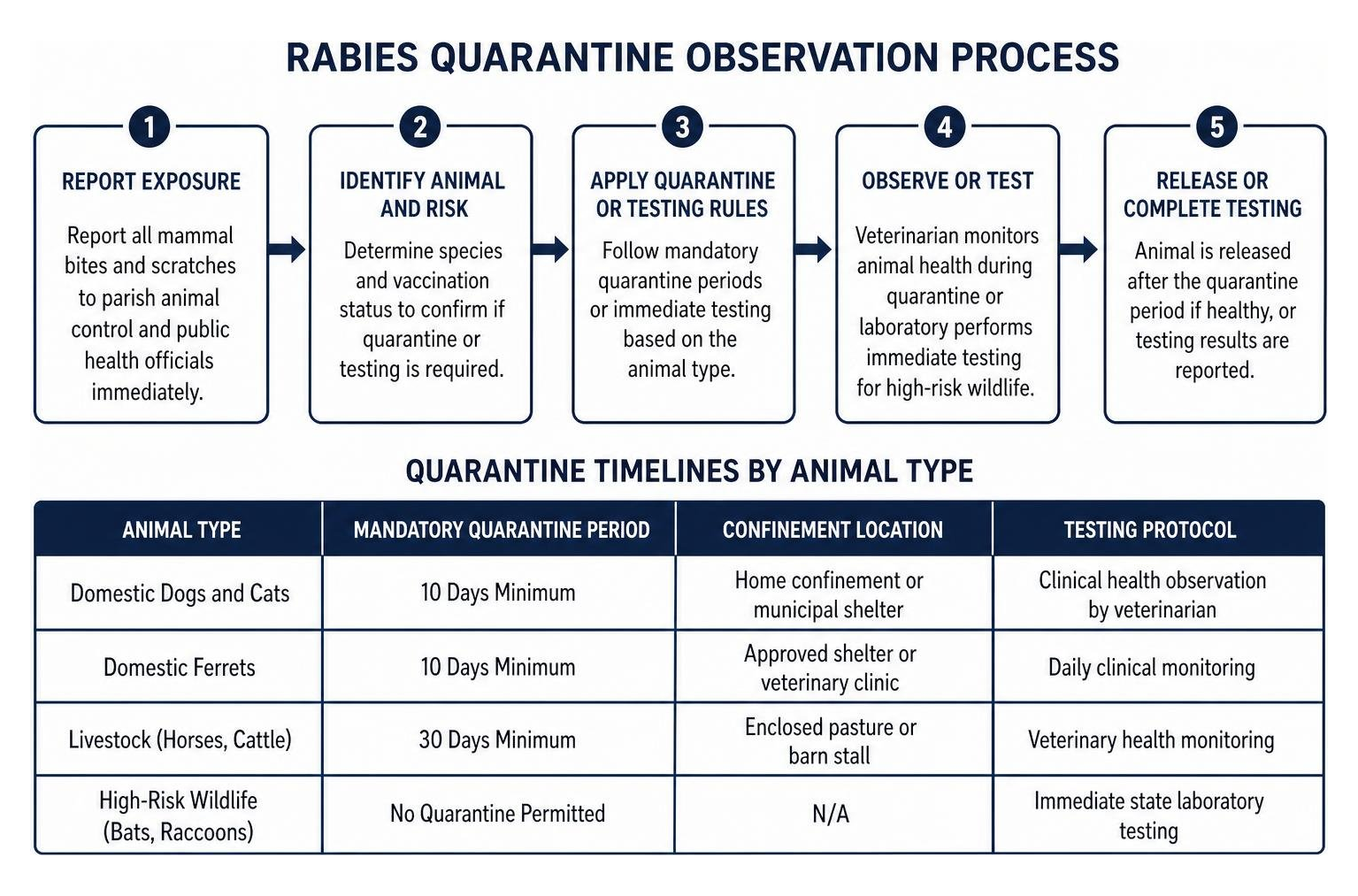
Louisiana public health regulations require reporting all mammal bites and scratches inflicted on human beings. Domestic dogs, cats, and ferrets must undergo mandatory 10-day health observation to confirm they do not carry rabies. Victims must notify parish animal control immediately to initiate containment and ensure appropriate medical evaluation.
Public health reporting remains mandatory because mammal bites carry significant viral and bacterial risks. Parish animal control agencies coordinate with regional sanitarians to track every incident. This monitoring ensures potential rabies exposures receive prompt medical attention.
Reportable Mammal Exposures Versus Exempt Species
All dog bites, cat scratches, and direct encounters with wildlife reservoirs like bats or raccoons must be reported. Small rodents such as squirrels, rats, and mice rarely carry rabies and are generally exempt from mandatory quarantine. Direct contact with any bat requires immediate health reporting even if puncture marks are not visible.
Bat bites are small and can heal quickly, making them easy to miss. If an unprovoked attack involves a wild carnivore, animal control captures the animal for laboratory testing. Domestic animals with unknown vaccine histories require immediate confinement.
Quarantine Timelines for Domestic Pets, Livestock, and Wild Animals
Dogs, cats, and ferrets that bite a person must undergo a strict 10-day quarantine. Most pets are observed at home if the owner maintains secure facilities and valid prior vaccines. Biting livestock face 30-day monitoring, while wild animals suspected of rabies must undergo laboratory brain tissue testing.
| Animal Type | Mandatory Quarantine Period | Confinement Location | Testing Protocol |
|---|---|---|---|
| Domestic Dogs and Cats | 10 Days Minimum | Home confinement or municipal shelter | Clinical health observation by veterinarian |
| Domestic Ferrets | 10 Days Minimum | Approved shelter or veterinary clinic | Daily clinical monitoring |
| Livestock (Horses, Cattle) | 30 Days Minimum | Enclosed pasture or barn stall | Veterinary health monitoring |
| High-Risk Wildlife (Bats, Raccoons) | No Quarantine Permitted | N/A | Immediate state laboratory testing |
Can Municipal Animal Control Agencies Be Held Liable for Dog Attacks?
Municipal animal control agencies are generally protected by governmental immunity and cannot be held liable for dog bites. Lawsuits against parish departments succeed only when officials violate a clear mandatory statutory duty or ignore verified dangerous dog orders. Sovereign immunity laws shield local governments from discretionary enforcement liability.
Holding a parish department legally liable requires proving officers violated an explicit statutory mandate rather than a discretionary safety guideline. For example, liability questions arise if animal control fails to seize a dog previously declared vicious by court order. However, proving government fault remains difficult compared to pursuing the pet owner directly.
Sovereign Immunity and Mandatory Duties in Animal Control Bite Claims
Under Louisiana Revised Statutes § 9:2798.1, public entities retain statutory immunity for discretionary policy choices and operational decisions. A victim must show that officers breached a non-discretionary duty set by state statute or parish code. Reviewing how Louisiana law handles dangerous dogs and owner liability clarifies why civil claims focus primarily on pet owners under Louisiana Civil Code Article 2321.
Common Legal Defenses Used by Local Government Agencies
Parish agencies routinely assert the public duty doctrine, arguing that animal ordinances protect the general community rather than individual victims. Municipal defense lawyers also cite a lack of prior written notice regarding an animal’s aggressive history. Resource limits and statutory immunity almost always shield local agencies from civil liability.
What Should You Do if Animal Control Closes a Dangerous Dog Investigation?
If animal control closes its investigation without taking corrective action, you can still pursue financial compensation through civil court. A closed municipal file does not prevent you from holding the negligent pet owner responsible for your losses. You should immediately request public records, secure witness statements, and consult an attorney.
A municipal closure merely indicates the agency found insufficient grounds for court-ordered seizure or euthanasia under parish ordinances. It does not release the owner from civil responsibility for your medical expenses and trauma. Following a dog attack in your neighborhood, timely reporting and documentation protect your legal recovery.
Pursuing Civil Remedies Against the Dog Owner Under Louisiana Law
Under Louisiana Civil Code Article 2321, dog owners are strictly liable for damages caused by their animals if they could have prevented the harm. Victims can recover compensation for hospital bills, reconstructive surgery, lost wages, and pain. These civil claims are paid through the dog owner’s homeowners or renters insurance policy.
Attorney Insight
In our years representing injured Louisiana residents, we have found that animal control records often provide the foundation for proving owner negligence. Animal control officers frequently document prior neighborhood warnings, unlatched gates, or past leash violations that owners deny in court. Securing parish dispatch logs before records are purged can significantly strengthen an insurance settlement.
What Immediate Steps Preserve Your Right to Compensation After an Animal Attack?
To protect your legal rights, seek emergency medical care, photograph your wounds, and report the bite to parish animal control immediately. Obtain the animal owner’s contact and insurance details, along with written statements from eyewitnesses. Avoid speaking with the owner’s insurance adjuster until you consult legal counsel regarding your damages.
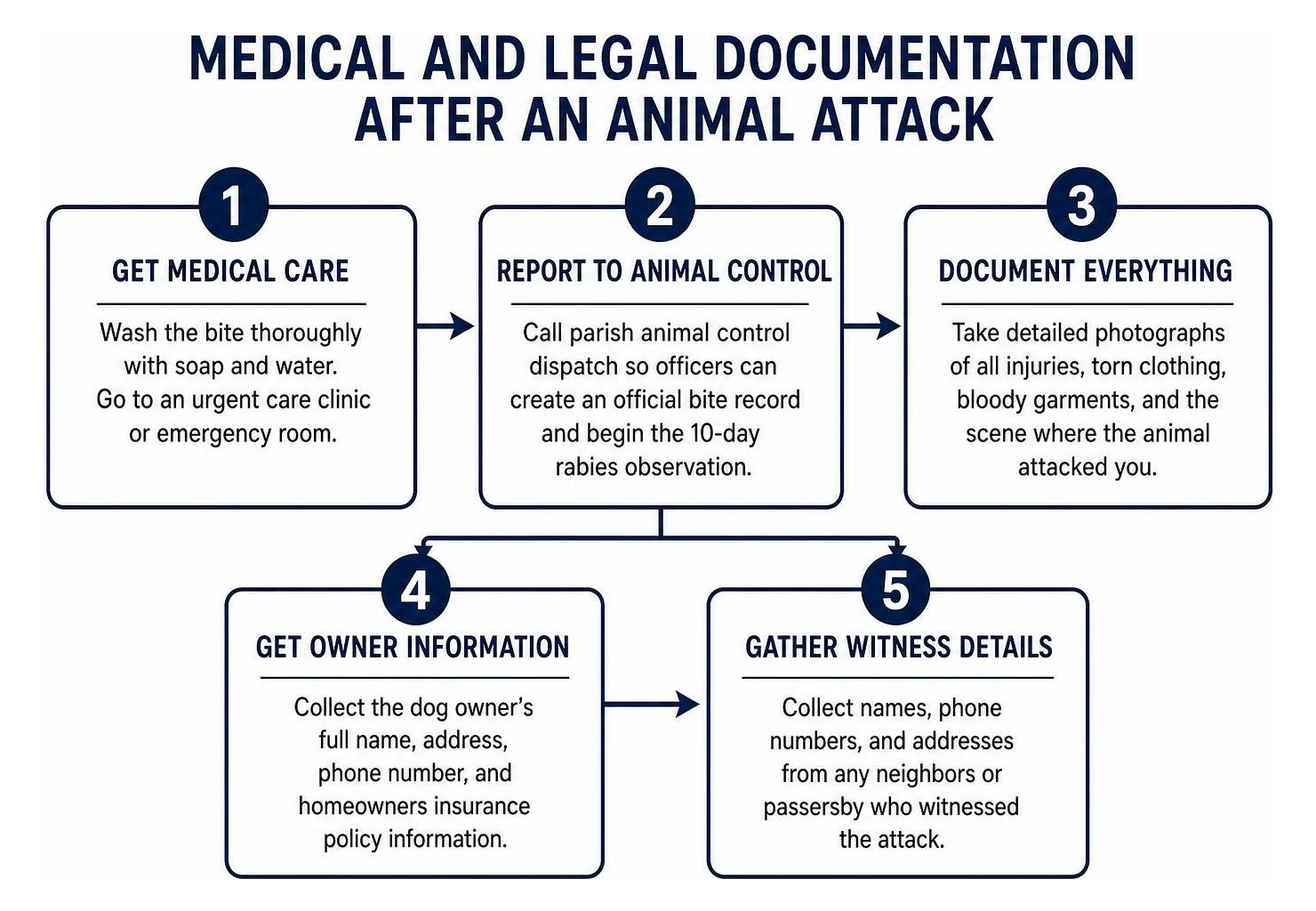
- Wash the bite thoroughly with soap and water and go directly to an urgent care clinic or emergency room.
- Call parish animal control dispatch so officers can create an official bite record and begin the 10-day rabies observation.
- Take detailed photographs of all lacerations, torn clothing, bloody garments, and the scene where the animal attacked you.
- Collect the dog owner’s full name, address, phone number, and homeowners insurance policy information.
- Gather names, phone numbers, and addresses from any neighbors or passersby who witnessed the attack.
- Keep every medical invoice, prescription receipt, and record of missed work hours in an organized folder.
Frequently Asked Questions About Baton Rouge Animal Control Bite Claims
How quickly must an animal bite be reported in East Baton Rouge Parish?
Animal bites should be reported immediately following emergency medical treatment. Louisiana public health regulations direct healthcare providers and victims to notify local animal control within 24 hours. Prompt reporting ensures the animal is quarantined before it can disappear or endanger other residents.
What happens if a biting animal cannot be located or verified for rabies?
If the animal cannot be found for the 10-day quarantine, treating physicians typically recommend rabies post-exposure prophylaxis (PEP). This treatment consists of a human rabies immune globulin injection followed by a series of four rabies vaccines. Animal control officers continue neighborhood canvassing to find the animal and confirm its vaccination status.
Can I still pursue a civil claim if animal control issues no citations to the owner?
Yes, you can file a civil claim even if animal control decides not to cite or fine the owner. Civil liability under Louisiana Civil Code Article 2321 operates independently from parish administrative or criminal decisions. Insurance claims and civil lawsuits focus on victim damages and owner negligence rather than municipal ordinance enforcement.
Protect Your Legal Recovery After a Baton Rouge Dog Bite Attack
Reporting an animal attack to parish authorities creates the official record needed to protect public health and support your financial recovery. While animal control officers focus on quarantine laws and parish safety, our legal team works to recover the compensation you need for medical bills and emotional trauma. Do not let insurance companies minimize the impact of a serious animal attack on your life.
Contact Pride Doran,
Share this Blog

When You Need Real Talk & Results™
Louisiana Personal Injury Attorneys Committed to Advocating on Your Behalf

