 Skip to content
Start Your Opelousas Accident Injury Claim With Clear Records
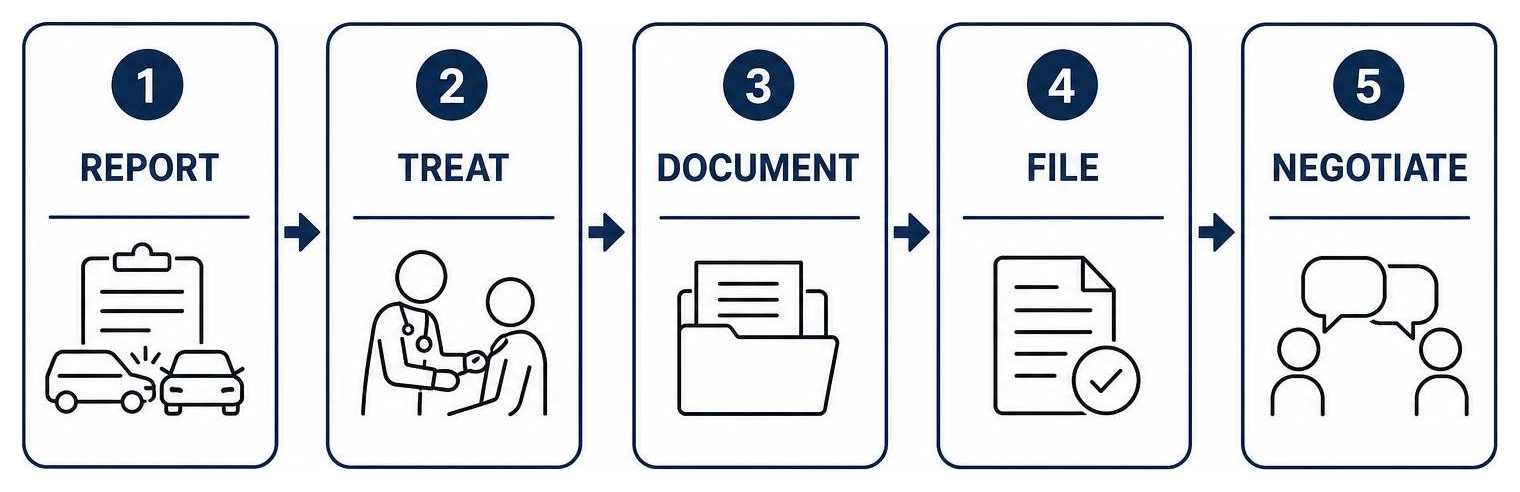
To protect an Opelousas accident injury claim, report the crash, get medical care, save evidence, notify your insurer, and avoid accepting a quick settlement before you know the full extent of your injuries.
- Call 911 and get to safety. A police report can help establish what happened.
- Take photos and collect information. Document vehicles, injuries, road conditions, insurance details, and witness contacts.
- See a medical provider promptly. Whiplash, soft-tissue injuries, and head injuries may become clearer over the following days.
- Keep every record. Save medical bills, treatment notes, missed-work information, repair estimates, and insurer messages.
- Act quickly. Louisiana generally gives injured people only one year from the crash date to file a personal injury lawsuit.
Louisiana uses an at-fault insurance system, so the person or company that caused the crash may owe compensation. That can include medical costs, lost income, pain and suffering, and other losses. But insurance companies may dispute fault, argue an injury was pre-existing, or challenge whether the crash caused it. Strong medical records and consistent facts matter.
I am Pride Doran, a Tulane Law graduate and trial lawyer with more than 20 years of experience handling auto and trucking injury cases in Louisiana. In an Opelousas accident injury claim, I focus on helping injured people document their losses and pursue fair treatment from insurers and responsible parties.
Opelousas accident injury claim vocab to learn:
Step-by-Step Guide to Filing an Opelousas Accident Injury Claim
Immediate Actions at the Crash Scene

The moments immediately following a collision in Opelousas can feel overwhelming, but what you do right at the scene sets the foundation for your entire legal claim. Staying calm and taking structured steps ensures your safety while gathering the critical facts needed to demonstrate fault.
First, pull your vehicle over to a safe area on the shoulder or a nearby parking lot if possible. Check yourself and your passengers for injuries. Call 911 immediately to request emergency medical services and local law enforcement. When the Opelousas Police Department or St. Landry Parish Sheriff’s deputies arrive, provide a factual description of what occurred without guessing or admitting fault. The official police report will serve as a foundational piece of evidence in your case.
While waiting for officers, take these practical measures:
- Exchange names, phone numbers, driver’s license details, and insurance policy info with all involved motorists.
- Take clear photos and videos of vehicle positions, road surface conditions, skid marks, traffic signals, weather factors, and visible bodily injuries.
- Gather names and phone numbers of neutral eyewitnesses before they leave the scene.
- Keep your remarks limited; avoid telling anyone at the scene that you are “fine” or “not hurt.”
To review a detailed breakdown of crash-scene protocols, read our guide on 5 steps to take after a car accident.
Seeking Prompt Medical Care and Documenting Delayed Injuries
Even if you walk away from a vehicle crash feeling relatively unharmed, getting evaluated by a doctor right away is critical. Adrenaline masks trauma, and many severe conditions—including whiplash, soft tissue damage, internal bleeding, and traumatic brain injuries—take hours, days, or even weeks to reveal their full physical impact.
For example, severe lumbar sprains or herniated discs frequently manifest after the initial shock wears off. If you suffer lower back discomfort after a crash, consulting an Opelousas back injury lawyer can help ensure your medical visits and diagnostic testing are correctly documented to link your trauma directly to the collision.

Prompt medical evaluations create an unbroken line of clinical evidence connecting the vehicle collision to your physical symptoms. If you wait several weeks to seek medical evaluation, insurance adjusters will inevitably argue that your condition was caused by an unrelated event or that your discomfort is exaggerated. You can explore more on this topic in our analysis of are delayed injuries common after a car accident and learn about typical diagnostic paths in common car accident injuries.
Understanding Louisiana Fault Laws and Determining Liability
At-Fault Insurance System and Comparative Negligence
Louisiana operates under an “at-fault” auto insurance framework. This means the driver who causes a crash is financially accountable for the resulting harm, and injured victims seek recovery primarily through the negligent driver’s liability policy.
Furthermore, Louisiana enforces a pure comparative fault rule. Under this rule, fault for a crash is split among the involved parties by percentage, and any award you recover is lowered by your assigned share of responsibility.
| Comparative Fault Percentage | Total Proven Damages | Final Recovery Amount |
|---|---|---|
| 0% Fault | $100,000 | $100,000 |
| 10% Fault | $100,000 | $90,000 |
| 20% Fault | $100,000 | $80,000 |
| 50% Fault | $100,000 | $50,000 |
This principle is clearly demonstrated in local jurisprudence. In the case of Chatman v. City of Opelousas (95-0950 La.App. 3 Cir. 12/6/95, Chatman v. City of Opelousas, 670 So.2d 211 (La. App. 1995)) – vLex United States, a driver was assigned 20% comparative fault in a low-speed T-intersection accident for failing to observe an oncoming vehicle in time. Consequently, his financial recovery was reduced proportionately. Working alongside a skilled Opelousas auto accident attorney helps ensure insurance companies do not unfairly inflate your percentage of fault to minimize their payout.
Identifying Responsible Parties and Negligence
Establishing liability requires showing that a party owed you a duty of reasonable care, breached that duty through action or inaction, and directly caused your harm. While driver error—such as texting behind the wheel, speeding, running red lights, or driving under the influence—is the leading cause of crashes in Louisiana, other entities can also hold legal liability:
- Commercial trucking companies: If an employer sets unrealistic delivery quotas or ignores vehicle maintenance rules.
- Auto manufacturers: When mechanical components, steering assemblies, or tire treads fail due to design or manufacturing defects.
- Municipal entities: When poorly maintained roadways, broken signals, or dangerous public infrastructure cause or contribute to a collision.
Identifying every responsible party allows you to pursue all available insurance coverages, maximizing your potential Opelousas car accident compensation.
How to Build Evidence for Your Opelousas Accident Injury Claim
Medical Proof, Doctor Testimony, and Witness Credibility
Winning full compensation for a bodily injury claim requires solid, objective evidence and consistent testimony. You cannot simply claim that an injury occurred; you must prove it using physical documentation, credible witness accounts, and medical records.
The impact of witness credibility and medical proof is highlighted in the landmark case McCarthy v. City of Opelousas (McCarthy v. City of Opelousas, 17-1035 (La. App. Apr 11, 2018)) – vLex United States. In that case, a plaintiff was awarded $5,073.66 in property damage for vehicle repairs after a tree branch fell, but was denied personal injury damages entirely. The court found that the plaintiff’s oral descriptions contradicted the physical evidence, and the lack of treating physician testimony left the injury claims unproven.
To prevent such evidentiary gaps, we work with treating doctors to ensure your clinical records contain:
- Detailed notes on the exact mechanics of your crash trauma.
- Objective diagnostic evidence, such as X-rays, CT scans, and MRIs.
- Formal statements connecting your physical symptoms directly to the collision.
- Comprehensive treatment plans outlining long-term care needs.
Managing Pre-Existing Conditions and Injury Aggravation
A common tactic used by insurance adjusters is claiming that an injured party’s pain stems from a pre-existing health issue rather than the collision itself. Under Louisiana law, however, the “eggshell plaintiff doctrine” establishes that a negligent party takes a victim as they find them. If a collision aggravates or worsens a prior spinal issue, joint problem, or past injury, you are legally entitled to compensation for the additional harm caused.
Proving an aggravation claim requires comparing your baseline health before the crash with your condition after the crash. Medical records, prior physical exams, and testimony from your treating physicians showing a distinct shift in pain level or loss of mobility are essential tools to establish this distinction. To understand how damages are evaluated in these scenarios, read our guide on what is my personal injury case worth.
Deadlines, Damages, and Negotiating Settlement Offers
Statute of Limitations and Recoverable Damages
Time is one of the most critical elements in an Opelousas accident injury claim. Under Louisiana Civil Code Article 3492, the statute of limitations (known in Louisiana as the prescriptive period) for filing a personal injury lawsuit is one year from the date of the crash. Missing this deadline almost always forfeits your legal right to pursue financial compensation in court.
When a claim is successfully pursued, damages generally cover both economic and non-economic losses:
- Economic damages: Quantitative financial losses, including emergency room care, hospital bills, physical therapy costs, medication expenses, past lost wages, and future reduced earning potential.
- Non-economic damages: Subjective, personal losses, such as physical pain and suffering, emotional distress, loss of enjoyment of life, and physical disfigurement.
Evaluating pain and non-visible internal injuries requires analyzing established legal precedents. For instance, in Pelous v. Stepter, Louisiana Court of Appeal, 1962, the appellate court affirmed a damage award for severe chest pain from a costochondral fracture (cartilage injury connecting the ribs to the sternum) and nerve damage. Even though cartilage injuries do not always register clearly on standard X-rays, clinical findings and symptom records established the physical severity of the harm.
Dealing with Insurance Adjusters and Maximizing Payouts
Insurance adjusters work for profit-driven corporations whose primary objective is keeping settlement payouts as low as possible. They frequently contact unrepresented accident victims shortly after a crash, offering quick cash settlements before the full physical impact of injuries is known.
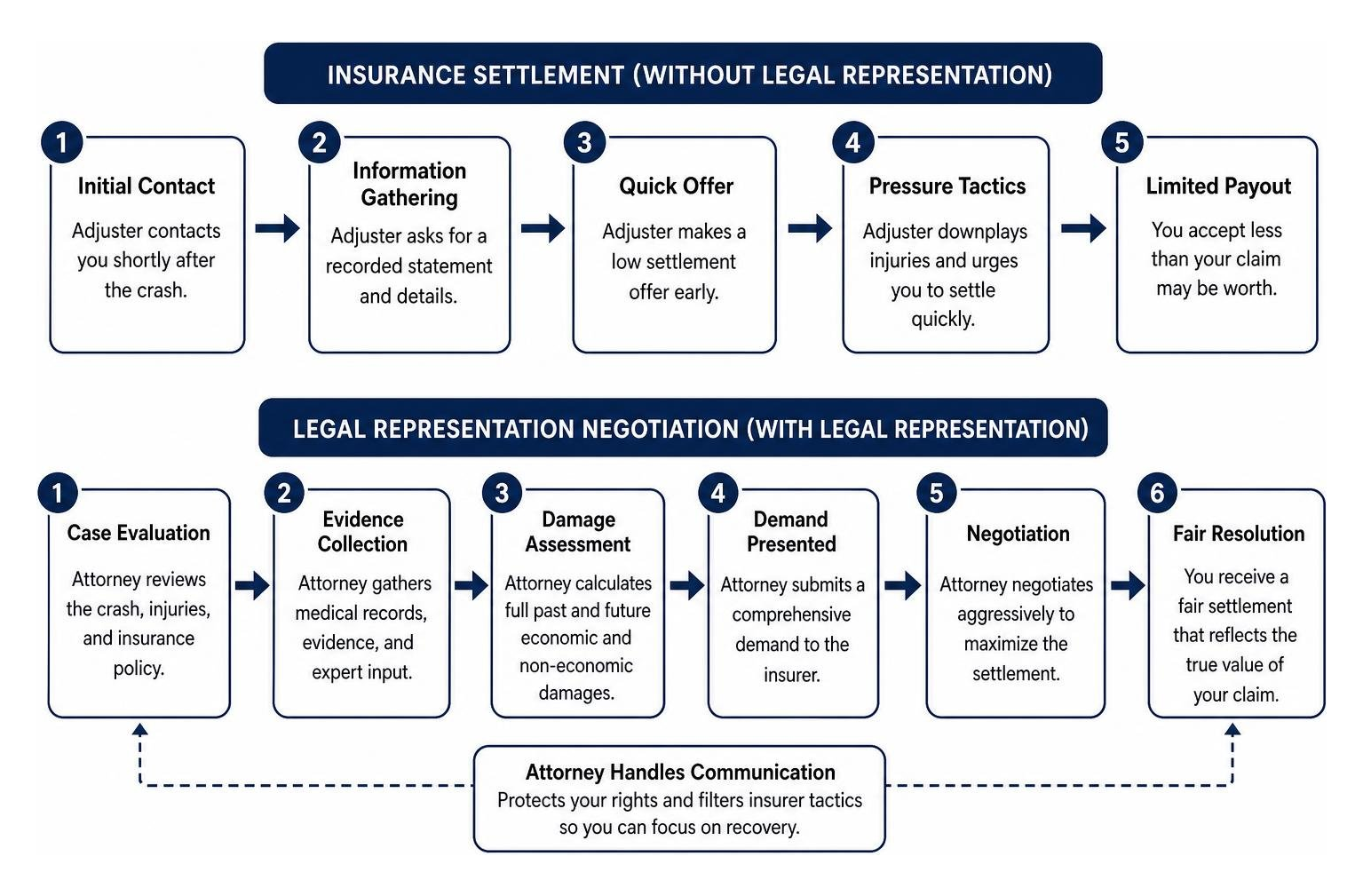
Adjusters may also attempt to record phone interviews, using offhand statements to shift fault or argue that injuries were minor. Having dedicated legal representation protects your rights against these aggressive strategies. Our team handles all communications, gathers evidence, calculates full past and future damages, and negotiates directly with adjusters to seek the payout you deserve.
For guidance on handling initial settlement letters, review our resources on Opelousas car wreck lawyer help and should I accept a settlement from the insurance company.
Frequently Asked Questions About Opelousas Injury Claims
How long do I have to file an Opelousas accident injury claim in Louisiana?
In Louisiana, you generally have exactly one year from the date of the motor vehicle accident to file a personal injury lawsuit, pursuant to Louisiana Civil Code Article 3492. Because this prescription period is among the shortest in the nation, gathering evidence and consulting legal counsel right away is vital to keep your rights intact.
What if I had a pre-existing medical condition before the car crash?
Having a pre-existing medical condition does not disqualify you from receiving compensation. Under Louisiana personal injury law, you can recover damages for the degree to which the crash aggravated or worsened your pre-existing condition beyond your pre-accident baseline health. Detailed medical records from before and after the crash are crucial to proving this change.
Can I recover compensation if I was partially at fault for the accident?
Yes. Louisiana applies a pure comparative fault rule. This means you can still recover compensation even if you were partially responsible for the crash. However, your total monetary recovery will be reduced proportionately by your assigned percentage of fault.
Empower Your Recovery with Trusted Opelousas Legal Support
Navigating complex medical treatment, insurance adjusters, and strict legal deadlines while recovering from a serious vehicle collision can feel overwhelming. Having a team fighting for your rights helps level the playing field against large insurance companies.
At Doran & Cawthorne, we are dedicated to supporting injury victims through every step of the legal process. With primary firm locations in Opelousas, LA, Lafayette, LA, and Baton Rouge, LA, our team provides accessible representation tailored to local court systems across southern Louisiana. We review crash records, consult treating doctors, calculate long-term costs, and push for maximum compensation so you can focus entirely on your physical recovery.
If you or a family member was hurt in a collision, do not wait until key evidence vanishes or legal filing deadlines pass. Contact us online today to consult an Opelousas car accident lawyer today and learn how we can help protect your financial recovery.
Share this Blog

When You Need Real Talk & Results™
Louisiana Personal Injury Attorneys Committed to Advocating on Your Behalf


