Skip to content
Heavy machinery crashes in Louisiana happen for a wide variety of reasons. Whether we are looking at an 18-wheeler transporting cargo along I-10 or agricultural equipment traveling along rural roads outside East Baton Rouge Parish, the massive weight and size of these vehicles mean that even minor mistakes lead to severe consequences.
Understanding why a Baton Rouge tractor accident happens is the first step in proving who was at fault:
- Driver error and inattention: Distracted driving, fatigue, and failing to monitor blind spots are major drivers of highway collisions. When commercial truck operators sit behind the wheel for long hours, reaction times drop dramatically.
- Rear-end collisions: Rural corridors frequently see high speed differentials. A passenger car traveling at 65 mph can approach a slow-moving farm tractor traveling at 15 mph in a matter of seconds. When drivers fail to reduce speed, devastating rear-end crashes occur. In one notable Louisiana State Police investigation on US 167, a passenger pickup truck rear-ended a John Deere farm tractor, flipping the tractor and fatally ejecting its unrestrained operator. You can read the full news coverage in this report on how a pickup truck crashed into a tractor.
- Mechanical failure: Brake breakdowns, tire blowouts, and steering failures can turn a heavy tractor or semi-truck into an uncontrollable hazard. When trucking fleets skip mandatory maintenance checks, they put everyone on the road in danger.
- Inadequate lighting and emblem usage: Farm machinery traveling on public thoroughfares must use slow-moving vehicle (SMV) emblems, reflective tape, and hazard lights. Without these warnings, drivers coming over a hill or around a turn may not see the equipment in time.
- Challenging road conditions: Narrow shoulders, poor lighting, and sudden weather changes in South Louisiana make negotiating large machinery incredibly treacherous.
To learn more about the common mechanics behind heavy truck collisions, explore our guide on understanding the common types of truck accidents.
Factors contributing to agricultural and highway vehicle rollovers
Rollover incidents are among the most lethal types of heavy equipment crashes. When a tractor or tractor-trailer tips over, the crush force can easily cause catastrophic or fatal injuries. Rollover protective structures (ROPS) — high-strength metal frames combined with seat belt use — are designed to prevent fatal crush injuries during an overturn. Research emphasizes that ROPS paired with consistent safety belt usage represents the most effective protection available when an equipment overturn happens.
When equipment lacks basic rollover protection, or when drivers fail to wear safety belts, the results are tragic. In another incident reported by news outlets, an operator lost his life when his machine tipped over on uneven terrain; you can learn more by reading about the tractor rollover incident.
The table below breaks down key operational differences and rollover risks between farm machinery and commercial semi-trucks:
| Risk factor | Agricultural farm tractors | Commercial semi-trucks / 18-wheelers |
|---|---|---|
| Primary crash locations | Rural roads, highway shoulders, private fields | Interstates (I-10, I-12), major freight corridors |
| Common causes of rollovers | Steep inclines, tree-pulling torque, rear-end impacts | Speeding on highway ramps, cargo shifts, sharp turns |
| Primary prevention gear | ROPS frames, seat belts, slow-moving vehicle signs | Electronic stability control, properly secured loads |
| Speed differential hazard | Very high (travels 10–25 mph near highway traffic) | Moderate (moves at standard highway traffic speeds) |
| Occupant ejection danger | Extreme (many older models lack enclosed cabs) | High (if seat belts are not fastened during roll) |
Steps to take after a collision with heavy machinery
When you are involved in a Baton Rouge tractor accident, taking systematic action immediately after the crash can make all the difference in building a strong claim for compensation.
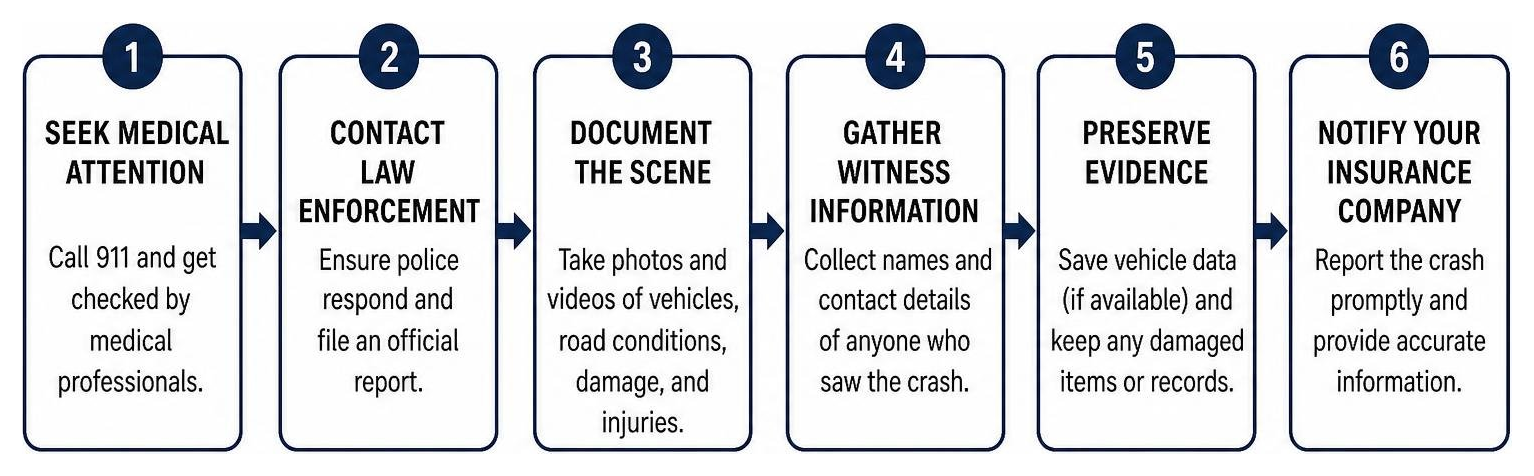
Immediate steps following a Baton Rouge tractor accident
- Seek emergency medical attention: Your health comes first. Call 911 immediately. Even if you feel fine, adrenaline can mask severe injuries like internal bleeding or whiplash. Having a medical professional evaluate you establishes a direct connection between the accident and your injuries.
- Contact law enforcement: Ensure the Baton Rouge Police Department or Louisiana State Police respond to the scene. Official police reports document critical facts, weather conditions, driver statements, and preliminary fault assessments. In fatal or severe wrecks, officers perform routine toxicology tests to check for driver impairment.
- Document the crash scene: Take photographs and videos from multiple angles. Capture vehicle placement, skid marks, road hazards, property damage, and visible injuries.
- Collect information: Exchange phone numbers, driver’s license details, and insurance policies with all drivers involved. Obtain contact information from any eyewitnesses who saw what happened.
- Review common injury triggers: Understanding what caused the crash helps guide your legal strategy. Read about what are the most common causes of truck accidents in injury claims to see how specific driver behaviors impact your case.
Protecting your rights against insurance companies

Commercial insurance carriers move fast after a heavy vehicle crash. Their claims adjusters visit the scene, gather evidence, and contact victims within hours. Their primary goal is simple: minimize the financial payout.
To protect yourself:
- Refuse recorded statements: You are not legally required to give a recorded statement to the insurance adjuster without your lawyer present. Adjusters often ask leading questions designed to get you to admit fault or downplay your pain.
- Preserve all evidence: Keep copies of all medical bills, prescription receipts, repair quotes, and time-off records from your employer.
- Be wary of early settlement offers: Insurance companies frequently offer fast cash settlements before the full extent of your medical treatment is known. Accepting an early settlement waives your right to ask for additional compensation later.
- Calculate full claim value: Before accepting any offer, learn about the factors that influence your recovery by reviewing our article on what is my personal injury case worth.
Liability and personal injury claims in Louisiana
Determining liability in a commercial tractor-trailer or heavy machinery crash can be far more complicated than a standard car collision. Multiple parties may share financial responsibility under Louisiana law.
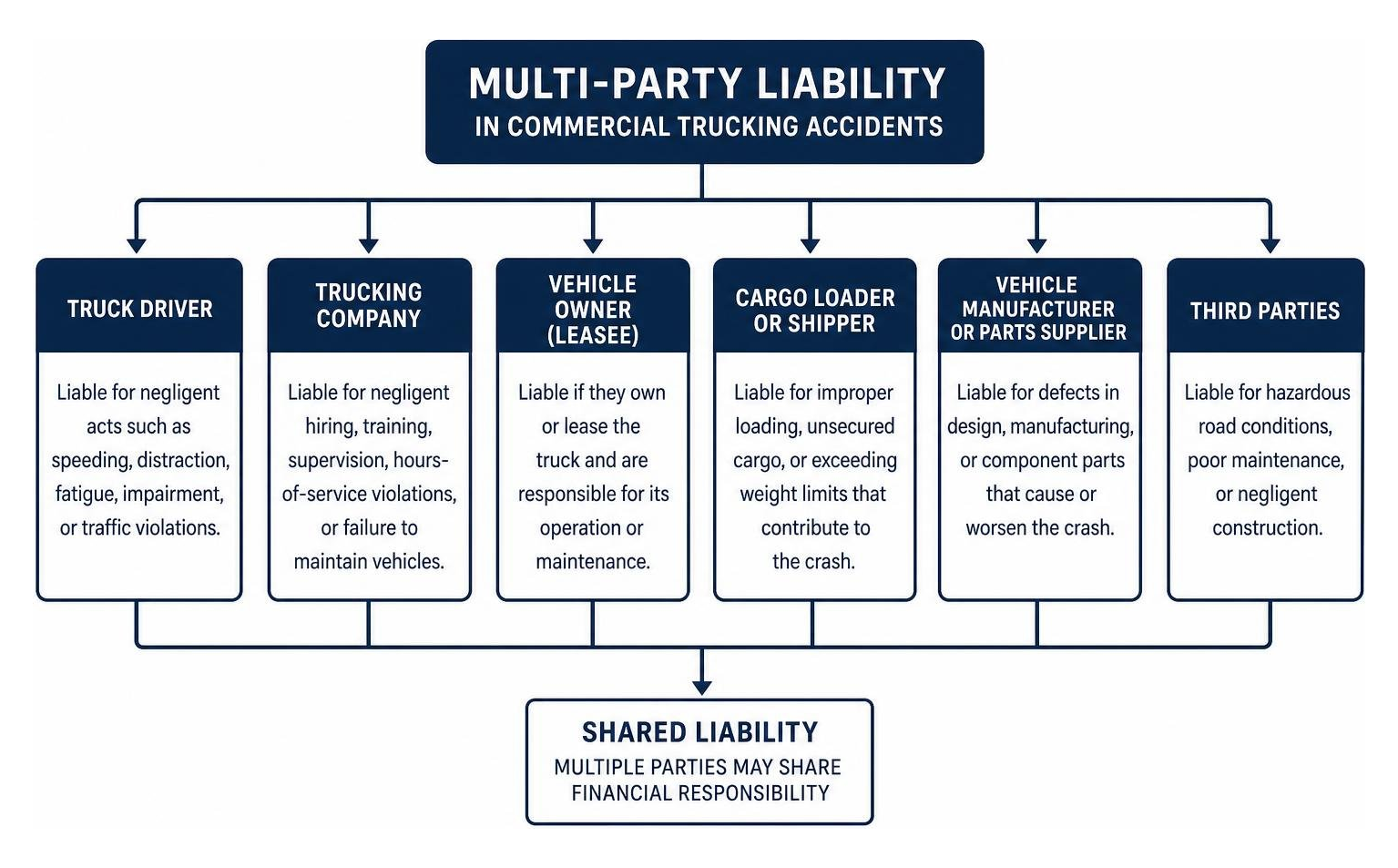
Who is liable in a Baton Rouge tractor accident claim?
Depending on how the crash occurred, liability may rest upon:
- Commercial trucking companies: Freight carriers are accountable for their employees’ actions. If a company pushes a driver to violate federal hours-of-service rules or fails to perform routine vehicle maintenance, the company can be held directly liable.
- Equipment operators: Drivers who speed, drive impaired, make unsafe lane changes, or operate heavy machinery without proper safety markings can be sued for personal negligence.
- Third-party maintenance contractors: If a mechanical failure like brake loss or tire separation caused the crash, the third-party shop responsible for servicing the truck may be liable.
- Cargo loaders: Improperly loaded or unformatted freight can cause an 18-wheeler to tip over on highway ramps.
Complex crashes on major highways often involve multiple vehicles and heavy traffic disruptions. For instance, news reports detailed how I-10 West reopened after a crash involving multiple tractor-trailers. To explore how legal fault is apportioned in these complex scenarios, check our overview on trucking accidents causes and liability.
Compensation options for victims and families
When heavy vehicles collide with passenger cars, injuries are rarely minor. Victims often require extensive medical treatment, long-term rehabilitation, and ongoing life support.
Through a personal injury or wrongful death claim, we help injured clients seek compensation for:
- Current and future medical expenses: Hospital stays, surgeries, physical therapy, and home care equipment.
- Lost income and reduced earning capacity: Financial support for time missed from work, as well as compensation if your injuries prevent you from returning to your career.
- Pain and suffering: Compensation for severe physical pain, emotional distress, and loss of enjoyment of life.
- Wrongful death damages: Funeral expenses, loss of companionship, and financial support for surviving family members who lose a loved one.

For a complete breakdown of the financial relief available to injury victims, read our detailed guide on the high cost of truck accidents and seeking compensation for your injuries.
Frequently asked questions about heavy equipment wrecks
What should I do right after a crash with a farm tractor or semi-truck?
Check for injuries and call 911 immediately. Request police and medical support to the scene. Take photos of the vehicle positions, road markings, property damage, and visible injuries. Collect witness contact details and driver insurance information. Finally, seek medical care right away and consult a attorney before speaking to any insurance adjusters.
How long do I have to file an injury claim in Louisiana?
Louisiana has a strict statute of limitations (known legally as the prescription period) for personal injury and wrongful death claims. In most cases, you have one year from the date of the accident to file a formal lawsuit in court. Missing this deadline generally means losing your legal right to recover compensation forever. Contacting a lawyer quickly ensures vital evidence like trucking logs and black box data are preserved.
Can I seek damages if a driver rear-ended slow-moving machinery?
Yes. Louisiana follows a comparative fault system. If a passenger vehicle rear-ends a slow-moving tractor, liability depends on several factors: Was the tractor equipped with proper lighting and slow-moving vehicle (SMV) emblems? Was the trailing driver speeding or distracted? Even if an operator or driver shares partial fault, they may still be eligible to recover partial damages proportional to the other party’s degree of negligence.
Fighting for your recovery after a heavy equipment wreck
A serious collision changes everything in an instant. While you focus on healing and recovering your health, our team at Doran & Cawthorne stands ready to handle the legal burden for you.
We understand how commercial insurance companies operate, and we do not let them push injured victims into unfair settlements. With office locations in Opelousas, Lafayette, and Baton Rouge, we represent clients across South Louisiana, giving every case the personal attention and aggressive advocacy it deserves.
If you or a family member was injured in a crash, turn to our experienced Baton Rouge truck accident lawyer services. We offer free consultations to evaluate your rights, explain your legal options, and help you secure maximum compensation for your recovery. Contact us today to get started on your path to justice.
Share this Blog

When You Need Real Talk & Results™
Louisiana Personal Injury Attorneys Committed to Advocating on Your Behalf