 Skip to content
What to Do When Filing an Opelousas Car Crash Lawsuit
Contact an Opelousas car crash attorney right away to protect your legal rights. An Opelousas car crash lawsuit requires obtaining prompt medical care, securing an official police report, and gathering critical crash evidence. You must file your petition in St. Landry Parish before the statutory deadline expires to recover compensation.
Deadlines require careful attention under Louisiana law. According to NHTSA crash data, 42,795 people died in U.S. traffic crashes in 2022. Knowing your legal rights early helps safeguard your physical and financial recovery.
By Pride Doran. I have spent more than 20 years handling injury claims across Louisiana courts. In every crash claim, I closely evaluate physical road evidence and detailed medical records.
How Do You File an Opelousas Car Crash Lawsuit in St. Landry Parish?
To file an Opelousas car crash lawsuit, you must submit a formal petition for damages to the St. Landry Parish Clerk of Court. Your petition names the negligent parties, describes the collision on local roads, and details your physical and financial losses. Strict court rules govern how this document is filed.
Your petition must clearly assert liability and detail injuries sustained along corridors like I-49 or Highway 190. Following the procedures outlined in our step-by-step accident injury guide ensures your suit proceeds smoothly. Proper filing avoids unnecessary administrative delays in the 27th Judicial District Court.
Prescription rules set strict deadlines for bringing a lawsuit after a motor vehicle collision. Under Louisiana Civil Code Article 3492, missing the statutory filing window bars your claim permanently. Consulting our team at Doran & Cawthorne helps ensure your petition is drafted accurately and filed on time.
What Are the Crucial Procedural Rules for Amending Your Lawsuit?
Louisiana law allows plaintiffs to amend their petitions to add claims or clarify facts. Under Louisiana Code of Civil Procedure Article 1153, an amended petition relates back to the original filing date when it arises from the same incident. This relation-back doctrine protects claims from being dismissed as untimely.
This rule proves essential when dealing with municipal or commercial defendants. In Lemelle v. City of Opelousas, the Louisiana Court of Appeal reinforced that procedural rules should be applied liberally to preserve a plaintiff’s right to their day in court. Timely amendments ensure valid claims move forward.
Why Does Proper Venue Selection Matter in St. Landry Parish Cases?
Venue determines the proper parish where your lawsuit may be legally heard. Filing in St. Landry Parish is appropriate when the collision occurred locally or when the defendant resides in the parish. Selecting the proper court prevents costly procedural challenges.
Procedural mistakes regarding venue can create serious legal obstacles. In Randell v. Prince, the Louisiana Court of Appeal confirmed that a defendant waives venue objections by making a general appearance. Choosing the correct forum keeps your case on track.
How Does Louisiana Pure Comparative Fault Affect Your Compensation?
Louisiana uses a pure comparative fault system that assigns a percentage of responsibility to each party involved in a wreck. Your total financial compensation is reduced directly by your assigned share of fault. You can still recover damages even if you bear partial responsibility for causing the accident.
Under Louisiana Civil Code Article 2323, comparative fault applies to all personal injury claims. For example, if a court finds you 20 percent responsible, you still receive 80 percent of your damages. This rule ensures partially at-fault victims can still recover.
Our legal team examines crash evidence to prevent insurers from unfairly shifting blame. Insurance companies often try to inflate a driver’s negligence to minimize settlement amounts. We challenge these tactics using physical road evidence and witness statements.
How Is Liability Apportioned in Opelousas Parking Lot and Reversing Collisions?
Parking lot collisions present distinct challenges under Louisiana’s duty-risk analysis. Drivers backing out of spaces bear a high duty of care to maintain a proper lookout before moving. Moving vehicles in travel lanes must also proceed cautiously and take reasonable evasive action.
Courts balance these competing duties when assigning comparative fault. In Reed v. United States, a federal court evaluated a collision involving a reversing vehicle in an Opelousas parking lot. The court allocated fault by weighing the backing driver’s vision failure against the passing driver’s reaction time.
How Do Speed Limits and Driver Distractions Impact Negligence Determinations?
Driver distractions heavily influence liability findings in local crash cases. Motorists who take their attention off the roadway violate their fundamental duty of reasonable care. Courts examine whether distraction directly contributed to the impact.
Judges also analyze posted speed limits against sudden road hazards. In Angelle v. Broussard, the Louisiana Court of Appeal analyzed driver actions involving speed and roadside distractions under sudden emergency principles. Accurate evidence remains crucial to proving driver negligence.
How Do You Prove Medical Causation and Pre-Existing Injury Aggravation?
Proving medical causation requires showing that the collision directly caused your injuries or worsened an existing health condition. You meet this legal burden by presenting objective medical records, diagnostic imaging, and physician testimony. Clear documentation establishes the connection between the crash impact and your physical limitations.
Insurance adjusters often try to deny claims by pointing to prior degenerative conditions. Under Louisiana’s eggshell skull doctrine, a negligent defendant takes a victim as they find them. If a collision aggravates a previously stable back condition, the defendant remains liable for that aggravation.
Our firm works closely with medical providers to distinguish prior symptoms from new trauma. You can review our guide on serious injury legal claims for more insight on documenting complex trauma. Clear medical proof protects your claim against unfair denials.
What Evidence Establishes Future Medical Costs in an Opelousas Car Crash Lawsuit?
Securing compensation for future medical treatment requires credible clinical evidence. Courts do not award future medical damages based on guesswork or speculation. Plaintiffs must prove the necessity and cost of future care through detailed physician evaluations.
Comprehensive life care plans outline anticipated surgeries, therapy sessions, and prescription needs. Economic analyses convert these medical recommendations into present-day dollar values. This documentation ensures your settlement covers ongoing care needs.
How Do Courts Handle Mitigation of Damages and Medical Funding Claims?
Injured drivers have a legal duty to mitigate damages by seeking timely medical care. Skipping doctor appointments gives insurance carriers grounds to argue your recovery was compromised. Courts evaluate whether a victim acted reasonably in following prescribed treatment plans.
When plaintiffs use medical funding to access treatment, defense lawyers often scrutinize the billed costs. Louisiana’s collateral source rule protects independent payments from reducing the defendant’s liability. Proper documentation proves your medical bills reflect reasonable and necessary care.
What Damages Can You Recover in an Opelousas Car Crash Lawsuit?
Victims of negligent drivers in Louisiana can recover both economic and non-economic damages. Economic damages reimburse tangible financial losses such as medical bills, lost income, and vehicle repair costs. Non-economic damages compensate for personal losses, including physical pain, emotional trauma, and reduced quality of life.
Recoverable economic damages include:
- Past and future medical expenses, including emergency care, surgery, and physical therapy.
- Lost wages and diminished future earning capacity caused by crash-related impairments.
- Out-of-pocket costs for prescription medications and required mobility devices.
- Repair or replacement costs for damaged motor vehicles and personal property.
Non-economic damages address the profound human impact of a severe collision. Pain and suffering awards compensate for ongoing physical discomfort and emotional distress. Documenting these impacts helps build a strong case for full financial recovery.
How Should Drivers Evaluate High-Value Settlement Claims in St. Landry Parish?
Assessing claim value requires analyzing liability evidence, policy limits, and injury severity. High-profile verdicts demonstrate that local juries hold negligent drivers accountable for catastrophic injuries. For example, a St. Landry Parish jury awarded a $220 million verdict in a severe ambulance collision trial.
While major verdicts show potential exposure, every car crash involves distinct facts. Settlement value depends on objective medical expenses, long-term disability, and available insurance coverage. We evaluate each case individually to pursue fair compensation.
What Are the Legal Standards for Claims Involving Government Employees?
Lawsuits involving government vehicles require navigating specific statutory requirements. When a public employee causes a crash, plaintiffs must prove the driver was acting within the course and scope of employment. Establishing vicarious liability allows injured victims to seek damages from the public agency.
Claims against government bodies often involve special notice requirements and statutory liability limits. Understanding these rules prevents dismissals based on immunity or missed administrative deadlines. Our attorneys guide clients through these detailed procedural standards.
Frequently Asked Questions About Filing an Opelousas Car Crash Claim
What is the deadline to file an Opelousas car crash lawsuit in Louisiana?
You must file your petition within Louisiana’s statutory prescriptive period for delictual actions. Under Civil Code Article 3492, failing to file before the prescriptive deadline permanently bars your recovery. Contacting an attorney promptly helps protect your legal right to compensation.
Can I still recover damages if I was partially at fault for the crash?
Yes, you can recover compensation under Louisiana’s pure comparative fault system. Under Civil Code Article 2323, your final damages are reduced in direct proportion to your share of fault. Even with partial blame, the other driver remains liable for their percentage of negligence.
What should I do immediately after a serious car wreck in Opelousas?
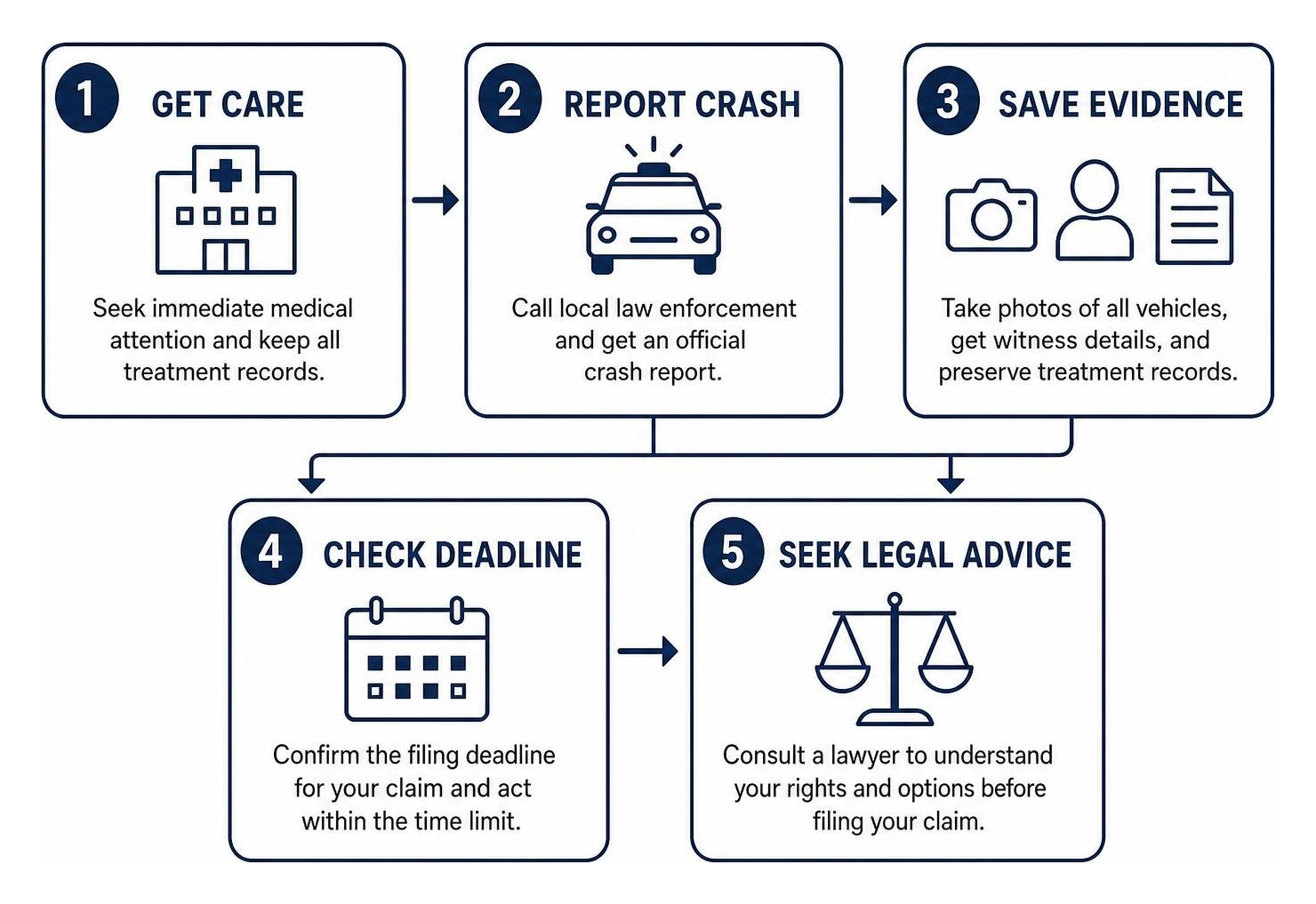
Seek immediate medical attention to diagnose and document your injuries. Call local law enforcement so an officer creates an official crash report at the scene. Preserve all evidence, including photos of vehicle damage, witness details, and medical records.
Securing Full Justice After a St. Landry Parish Collision
Navigating the aftermath of a serious collision requires prompt action and thorough evidence collection. From filing petitions in the 27th Judicial District Court to calculating future medical care, every legal step matters. Understanding comparative fault and statutory deadlines safeguards your financial recovery.
“A successful injury claim depends entirely on the strength of your documentation. When we handle a case, we secure physical crash evidence and medical records immediately to establish full accountability against negligent drivers.” — Nicholas Doran
If you suffered injuries on St. Landry Parish roads, our firm is prepared to help you recover full compensation. We maintain offices in Opelousas, Lafayette, and Baton Rouge to assist injured drivers across the region. Review our Lafayette car accident attorney resources to understand your options.
Contact Nicholas Doran,
Share this Blog

When You Need Real Talk & Results™
Louisiana Personal Injury Attorneys Committed to Advocating on Your Behalf

