Skip to content
What to Do After a Baton Rouge Semi Accident
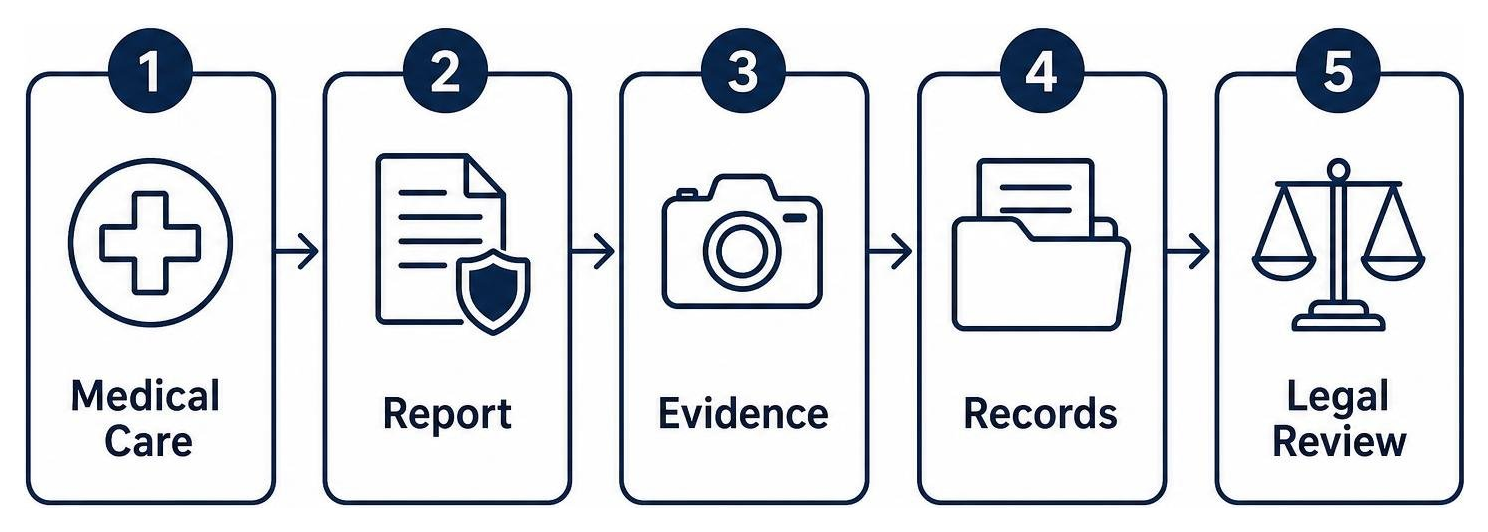
After a Baton Rouge semi accident, protect your health first, call 911, document what you can safely see, and avoid giving a recorded statement to an insurance company before you understand your rights.
- Get medical care, even if you feel stable at the scene.
- Call law enforcement and request a crash report number.
- Take photos of vehicle damage, road conditions, cargo, and injuries if it is safe.
- Collect witness names and contact information.
- Keep bills, medical records, missed-work information, and all insurance messages.
A recent I-10 East crash near Essen Lane shows how quickly a truck wreck can become a larger emergency: a semi carrying about 50,000 pounds of flour overturned, leading to a multi-car pileup and seven hospital transports in stable condition. These crashes can close lanes for hours, create dangerous cargo spills, and leave injured drivers facing medical costs, lost income, and pressure from insurers while the cause is still under investigation.
I am Pride Doran, a trial lawyer with more than 20 years of experience representing people in vehicle and trucking claims, including matters arising from a Baton Rouge semi accident. I have helped injured people pursue fair treatment in negotiations, court, and other dispute-resolution settings.
Causes and Anatomy of a Major Baton Rouge Semi Accident
Commercial truck crashes on our local highways are rarely simple collisions. When an 18-wheeler carrying massive weight loses control, the sheer physical force involved transforms a routine commute into a high-stakes emergency. Fully loaded tractor-trailers can weigh up to 80,000 pounds, making them far harder to maneuver or bring to a sudden stop than standard passenger vehicles.
When a semi-truck overturns on a busy corridor, the root cause often traces back to a combination of driver error, mechanical breakdown, or improper cargo handling. Drivers faced with tight delivery deadlines may experience severe fatigue or exceed posted speed limits to make up time. Speeding or erratic lane changes significantly increase the risk of jackknifing or losing control, especially on curved ramps or in heavy traffic. In addition, mechanical issues such as worn brakes, tire blowouts, or steering failure can make a massive vehicle completely uncontrollable in an instant.
Cargo management is another critical factor. When freight inside a trailer is improperly loaded, poorly secured, or unbalanced, shifting weight during a turn or sudden braking maneuver can pull the entire trailer off balance, flipping the rig onto its side. Victims seeking clarity after a crash often need to know how to choose the best truck wreck lawyer in Baton Rouge to investigate these complex, multi-layered factors.
Common Roadways Impacted by a Baton Rouge Semi Accident
Major interstates and state routes around East Baton Rouge Parish serve as heavy freight corridors connecting Gulf Coast shipping lanes and industrial hub centers. Because commercial traffic shares these lanes with thousands of commuter cars daily, certain thoroughfares experience a higher concentration of tractor-trailer incidents:
- Interstate 10 eastbound: Heavily traveled by regional logistics fleets, particularly near the Essen Lane exit, where lane merging and sudden slowdowns frequently contribute to rear-end crashes and rollovers.
- Interstate 110 southbound: A major arterial route through the city where lane blockages severely snarl commuter traffic, such as a prior incident where two right lanes were blocked due to a spilled load on I-110 southbound.
- Mississippi River Bridge corridor: Sharp ramps, high bridges, and heavy congestion near Perkins Road create tight bottlenecks where stalled or crashed commercial rigs quickly cause miles of backup.
- LA Highway 30: A crucial route connecting industrial plants and business parks where heavy commercial vehicles turn onto busy lanes, creating extreme collision risks when vehicles stop in active travel lanes.
Cargo Hazards, Spills, and Secondary Collisions
When an 18-wheeler crashes, the dangers extend far beyond the initial impact. A major hazard stems from cargo spills, which can scatter thousands of pounds of freight across active lanes of traffic. Loose cargo creates immediate road hazards, blinding dust, or slick surfaces that make it impossible for trailing drivers to brake safely.
For instance, when a truck carrying 50,000 pounds of flour overturns, the spilled freight quickly coats the roadway, creating a sudden, multi-car pileup as oncoming drivers lose traction. Similar chain-reaction hazards occur when log trucks spill heavy timber, or liquid tankers leak hazardous materials. Following a major spill, secondary crashes frequently occur when drivers behind the initial wreck swerve or slam on their brakes to avoid flying debris.
Assessing Injuries, Fatalities, and Immediate Traffic Detours
The force generated by an 18-wheeler impact regularly inflicts severe, life-altering injuries on occupants of smaller passenger cars. In major collisions across East Baton Rouge Parish, emergency services, including Baton Rouge EMS and local fire departments, coordinate rapid triage and hospital transports for injured victims.
Victims involved in multi-vehicle truck crashes frequently suffer from severe trauma, including traumatic brain injuries, spinal cord damage, broken bones, and internal organ injuries. In the most serious cases, victims require extensive emergency surgery, intensive care stays, and months or years of rehabilitation. Dealing with Baton Rouge catastrophic injuries requires a clear understanding of immediate medical needs as well as long-term financial consequences.
Beyond the severe physical harm inflicted on victims, major commercial vehicle accidents cause widespread traffic paralysis. When a semi-truck overturns or catches fire, state troopers and local police must shut down entire sections of the interstate for multiple hours to allow emergency crews to rescue victims, fight fires, tow heavy wreckage, and repair damaged crash barriers. During these extended closures, authorities establish emergency detours, often diverting thousands of stranded vehicles onto secondary arterial routes like Airline Highway to bypass the blockade.
Immediate Steps to Take After Being Involved in a Baton Rouge Semi Accident
If you or a family member is involved in a collision with a commercial vehicle, taking clear, methodical steps immediately afterward can protect your health and preserve your legal claims:
- Prioritize immediate safety and medical care: Check yourself and passengers for injuries. If possible, move your vehicle to a safe spot out of active traffic lanes. Seek immediate medical evaluation from emergency responders, even if you feel stable, as internal injuries or concussion symptoms may be delayed.
- Contact emergency law enforcement: Call 911 immediately so police officers and state troopers can secure the scene, manage traffic, write an official accident report, and collect official crash details.
- Document the crash scene safely: Use your phone to photograph all vehicle positions, skid marks, road conditions, debris fields, spilled cargo, driver IDs, and visible physical injuries.
- Gather key witness and driver details: Obtain the commercial driver’s name, employer, commercial driver’s license (CDL) number, motor carrier authority information, insurance provider, and contact details for neutral eye-witnesses.
- Preserve medical records and expense documentation: Keep detailed records of all hospital visits, physician notes, physical therapy sessions, prescription receipts, missed workdays, and communications with insurance adjusters.
Understanding how every Baton Rouge trucking victim can protect their rights helps ensure that critical evidence is preserved before motor carriers or insurance adjusters alter or overwrite vital crash data.
Traffic Management, Safety Warnings, and Investigations
Following a serious commercial wreck, official investigations are conducted by agencies such as Louisiana State Police Troop A. Troopers carefully evaluate the crash site, examine driver logbooks, analyze black box electronic data, inspect tire and brake condition, and collect routine toxicology samples from commercial drivers to check for potential impairment.
Law enforcement authorities also issue vital public safety warnings to reduce secondary accidents. A primary hazard highlighted by state troopers involves motorists stopping directly in active travel lanes to assist disabled vehicles on the shoulder. Pausing in an active lane of traffic, especially during nighttime or reduced visibility, creates extreme collision hazards for oncoming drivers. Authorities strongly remind all drivers to pull completely off the roadway onto the shoulder, keep hazard lights activated, and stay buckled in while awaiting emergency help.
To help you organize your records after a crash, review this essential checklist:
- Official police accident report number and investigating officer name
- High-resolution photos and videos of the scene, damaged vehicles, and cargo
- Contact information and recorded statements from eyewitnesses
- Truck driver details, motor carrier company name, and USDOT registration numbers
- Complete medical treatment records, bills, and discharge summaries
- Documentation of lost wages, income statements, and missed days at work
- All written or recorded communications from commercial insurance adjusters
Determining Liability and Legal Steps Following a Crash
Establishing liability after a commercial vehicle wreck is far more intricate than a standard driver-versus-driver car crash. Federal Motor Carrier Safety Administration (FMCSA) regulations govern commercial trucking operations across the United States. When a commercial truck causes a wreck, multiple parties may share legal responsibility for the resulting damages.
Investigating liability requires looking beyond the driver’s immediate actions to evaluate whether systemic negligence occurred. To better understand these factors, review our guide on understanding the common types of truck accidents.
Key areas of potential negligence include:
- Truck driver negligence: Speeding, distracted driving, driving while fatigued in violation of federal hours-of-service rules, or driving under the influence.
- Motor carrier / trucking company negligence: Pressuring drivers to breach maximum driving hour limits, failing to perform required background checks, failing to conduct routine drug testing, or neglecting basic vehicle maintenance.
- Cargo loader and shipper liability: Overloading trailers beyond legal weight limits, failing to properly tie down freight, or unevenly distributing cargo weight.
- Maintenance and repair vendor liability: Performing faulty repairs, installing defective replacement parts, or approving unsafe vehicles for highway travel.
To illustrate how legal liability is evaluated between commercial drivers and their parent companies, consider the following comparison:
| Responsible party | Potential negligent actions | Evidence used to prove liability |
|---|---|---|
| Commercial truck driver | Excessive speeding, distracted driving, tailgating, hours-of-service violations, failure to yield | Dashcam video, cell phone records, electronic logging device (ELD) data, toxicology reports |
| Motor carrier / trucking company | Inadequate driver training, hiring unsafe drivers, forcing illegal delivery schedules, negligent vehicle upkeep | Driver qualification files, company dispatch logs, internal communication records, fleet maintenance histories |
| Cargo loading facility | Overloading trailer capacity, improperly securing cargo, uneven weight distribution across axles | Bills of lading, weigh station tickets, cargo loading manifest records, physical scene photos |
When our legal team at Doran & Cawthorne represents crash victims, we take immediate action to send spoliation letters to trucking companies. These formal legal demands prevent commercial carriers from destroying vital evidence, such as black box event data recorders, dashcam video, inspection logs, and maintenance files.
Frequently Asked Questions About Baton Rouge Truck Collisions
What were the primary causes behind recent major semi crashes on I-10 near Essen Lane?
Recent major crashes on I-10 near Essen Lane have been caused by a combination of overloaded or improperly secured freight, vehicle rollovers, excessive speed in congested traffic zones, and sudden lane changes. When an 80,000-pound rig loses stability or shifts weight unexpectedly during braking, it can easily trigger a multi-car chain-reaction pileup.
How long do highway closures usually last after an 18-wheeler overturns in East Baton Rouge?
Highway closures typically last anywhere from two to four hours or longer depending on the severity of the wreck. Emergency responders must treat and transport injured individuals, secure spilled cargo, drain leaking diesel fuel, tow overturned commercial rigs using specialized heavy-duty cranes, and repair damaged crash barriers or road surfaces before lanes can safely reopen.
What safety precautions should motorists follow when encountering disabled commercial trucks on Louisiana highways?
When approaching a disabled commercial truck or an active accident scene, reduce your speed immediately and move over into an adjacent lane if safe to do so. Never stop or park your vehicle in an active travel lane to assist a stranded driver on the shoulder. If your own vehicle experiences mechanical failure, pull completely off the highway onto the outer shoulder, activate hazard lights, remain inside your vehicle with your seat belt fastened, and dial emergency services.
Protecting Your Rights and Pursuing Full Compensation After a Truck Wreck
A major commercial vehicle collision can turn your family’s life upside down in seconds. Facing steep medical bills, physical pain, lost income, and aggressive corporate insurance adjusters is overwhelming. You do not have to fight powerful trucking companies or insurance carriers alone.
At Doran & Cawthorne, our legal team brings decades of combined personal injury trial experience to every client’s fight. We represent injured individuals across Louisiana, with dedicated office locations in Baton Rouge, Lafayette, and Opelousas. Our priority is to thoroughly investigate your crash, hold negligent motor carriers accountable, and pursue the full financial compensation you deserve for medical costs, future rehabilitation, lost wages, and pain and suffering.
If you or a loved one was injured in a commercial vehicle wreck, reach out to an experienced truck accident lawyer in Baton Rouge today to discuss your rights and learn how we can help guide you toward full recovery.
Share this Blog

When You Need Real Talk & Results™
Louisiana Personal Injury Attorneys Committed to Advocating on Your Behalf