 Skip to content
When a loved one develops bed sores in an Opelousas nursing home
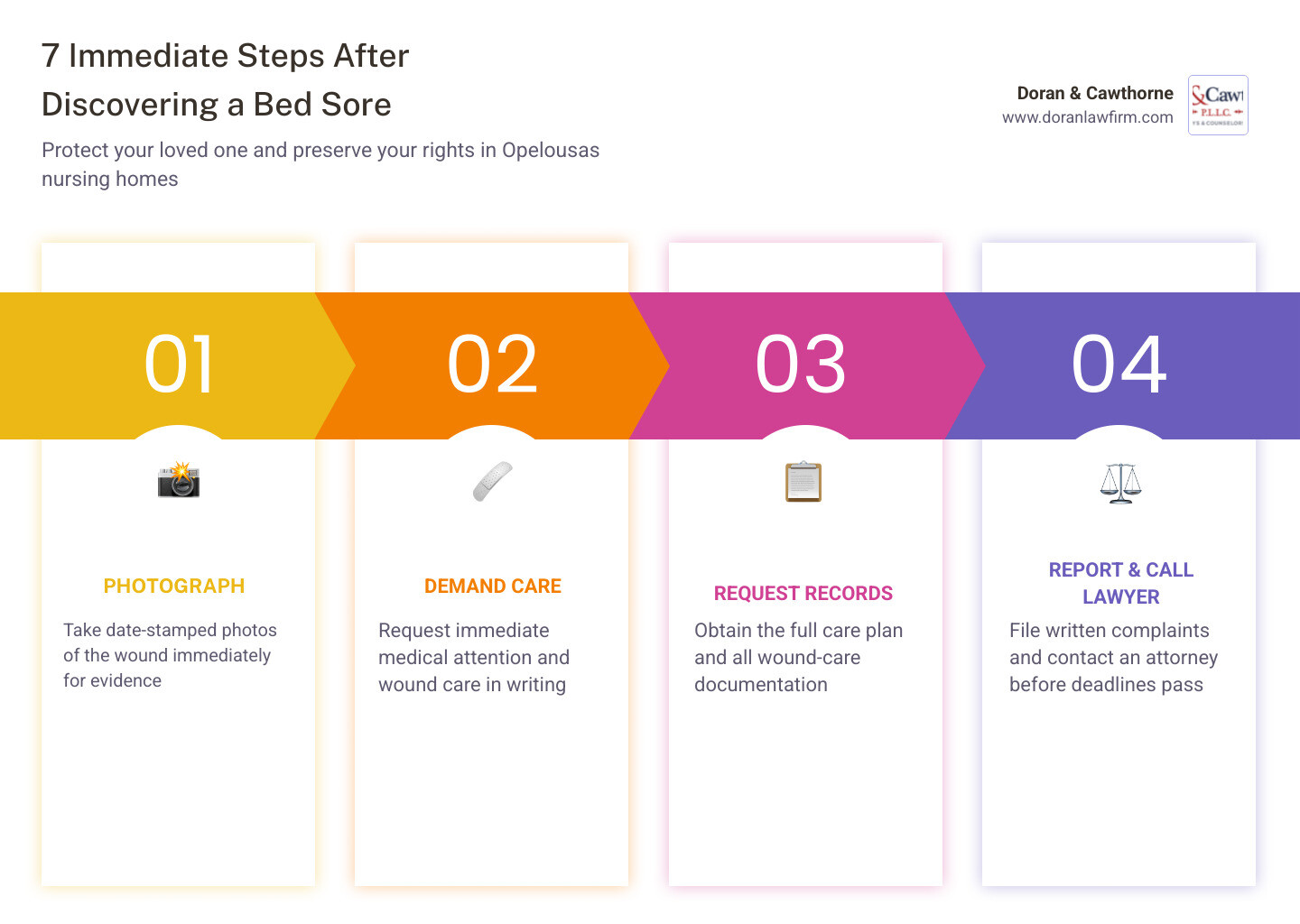
If you need an Opelousas bed sores attorney, here is what you should do right now:
- Photograph the wound with a date-stamped phone camera.
- Demand immediate medical attention from the facility in writing.
- Request the full care plan and all wound-care documentation.
- File a written complaint with the facility administrator and director of nursing.
- Contact the Louisiana Nursing Home Complaint Hotline at 1-888-810-1819.
- Preserve all records — medical charts, bills, transfer paperwork, text messages.
- Speak with a lawyer immediately — Louisiana deadlines can be as short as one year.
Discovering that a loved one has developed bed sores in a nursing home is alarming — and it should be. These wounds are not a normal part of aging. In most cases, they are a sign that something went seriously wrong with the care your family member was promised.
Louisiana already ranks among the states with the highest rates of pressure ulcers in long-term care facilities — well above the national average. Recent years have brought high-profile examples of nursing home failures across the state, including a nearly $9 million proposed settlement after hundreds of residents were placed in dangerous conditions during Hurricane Ida. These are not isolated incidents. They reflect a pattern that families in Opelousas and across St. Landry Parish need to understand.
The good news: Louisiana law gives residents and families the right to hold negligent facilities accountable. But the window to act can close faster than most people expect.
I’m Pride Doran, a trial attorney with over twenty years of experience representing injured individuals across Louisiana — including families dealing with nursing home neglect and pressure ulcer cases. As an Opelousas bed sores attorney, I’ve seen how quickly evidence disappears and how aggressively facilities and their insurers work to minimize liability, which is why acting early makes all the difference.
Meta title: Opelousas bed sores attorney: 7 key tips
Meta description: Need an Opelousas bed sores attorney? Learn 7 key steps after a nursing home pressure ulcer, Louisiana deadlines, evidence, rights, and compensation.
Slug: opelousas-bed-sores-attorney-7-key-tips
What bed sores mean in Opelousas nursing homes
Bed sores, also called pressure ulcers or pressure injuries, are wounds caused by pressure that cuts off blood flow to the skin and underlying tissue. They often develop on bony areas of the body, including the:
- Tailbone and buttocks
- Hips
- Heels
- Ankles
- Elbows
- Shoulders
- Back of the head
In Opelousas nursing homes, bed sores are especially concerning because many residents cannot move easily on their own. A resident who is bedridden, uses a wheelchair, has dementia, or is recovering from surgery may depend completely on staff for repositioning, hygiene, nutrition, hydration, and skin checks.
When those basics are missed, pressure ulcers can develop quickly. A small red spot can become an open wound. An open wound can deepen. A deep wound can become infected. In severe cases, bed sores can lead to hospitalization, sepsis, bone infection, surgery, or death.
Why pressure ulcers are serious, not “normal aging”
Aging can make skin thinner and more fragile, but bed sores are not something families should shrug off as “just part of getting older.” That is like saying a flat tire is part of driving. It can happen, but someone still needs to ask why.
Pressure ulcers usually form because a resident’s needs were not properly met. Common risk factors include:
- Immobility
- Dehydration
- Malnutrition
- Incontinence
- Diabetes or vascular disease
- Poor circulation
- Fragile skin
- Reduced sensation
- Cognitive decline
- Delayed medical care
Nursing homes are supposed to identify these risks and create a prevention plan. That may include turning and repositioning, pressure-relieving mattresses, heel protectors, extra nutrition, incontinence care, and regular skin assessments.
When a resident develops a serious pressure ulcer, families should ask whether the facility had enough staff, whether staff followed the care plan, and whether warning signs were ignored. Louisiana’s high pressure ulcer prevalence in long-term care makes this issue especially important for families in Opelousas.
Recent Louisiana nursing home controversies have also placed facility accountability under a brighter spotlight. The proposed nearly $9 million Hurricane Ida nursing home settlement and the reported $8.2 million agreement involving allegations that facility funds were misused are reminders that resident safety depends on real oversight, not just glossy brochures and cheerful lobby flowers.
The four stages of bed sores and how they progress
Bed sores are generally classified by severity. The higher the stage, the more serious the wound.
| stage | what families may see | possible complications | urgency |
|---|---|---|---|
| stage 1 | Red, purple, or discolored skin that does not blanch when pressed; skin may feel warm, firm, or painful | Skin breakdown if pressure continues | Prompt evaluation and pressure relief |
| stage 2 | Open sore, blister, shallow crater, or broken skin | Infection, worsening pain, rapid progression | Immediate treatment and wound monitoring |
| stage 3 | Full-thickness tissue loss; deeper crater; fat may be visible | Serious infection, tunneling, hospitalization | Urgent wound-care intervention |
| stage 4 | Muscle, tendon, or bone may be exposed | Sepsis, osteomyelitis, surgery, death | Medical emergency |
| unstageable | Dead tissue or slough covers the wound, making depth unclear | Hidden deep tissue damage | Urgent medical evaluation |
| deep tissue injury | Dark purple or maroon area, blood-filled blister, or soft tissue damage beneath intact skin | Rapid deterioration | Immediate pressure relief and monitoring |
Warning signs of infection include foul odor, pus, drainage, swelling, warmth, fever, confusion, increased pain, or red streaking around the wound. If you see these signs, do not wait for the next routine appointment. Demand medical attention immediately.
7 key tips from an Opelousas bed sores attorney
Pressure ulcer cases often involve two failures: failure to prevent the wound and failure to treat it after it appears. Both can support a legal claim when the facts show neglect.
Families can learn more about our local services through our Opelousas injury services page. Below are seven practical tips we recommend when a loved one develops a bed sore in a nursing home.
Opelousas bed sores attorney tip 1: treat every pressure ulcer as urgent
Do not let anyone dismiss a new sore as “nothing.” Even stage 1 redness can become dangerous if pressure continues.
Ask the facility, in writing, to:
- Notify the resident’s physician
- Evaluate the wound immediately
- Screen for infection
- Provide pain control
- Order wound-care treatment when needed
- Consider hospital transfer if the wound is severe or infected
- Update the care plan to prevent worsening
Written requests matter. A phone call can be forgotten. A written request creates a timeline.
Tip 2: ask whether the facility followed a repositioning plan
Residents at risk for pressure ulcers often need scheduled repositioning. For many bedridden residents, that means turning about every two hours. Wheelchair users may need more frequent pressure relief, special cushions, and help shifting weight.
Nursing homes should also use appropriate equipment when needed, such as:
- Pressure-relieving mattresses
- Heel protectors
- Wheelchair cushions
- Pillows or wedges
- Mobility assistance devices
Federal nursing home care standards require facilities to provide the care and services needed to maintain or improve a resident’s condition, including pressure ulcer prevention and treatment. You can review the federal rule on quality of care here: federal resident care standards.
Ask for the turning logs and activities of daily living records. If the chart has blank spaces where repositioning should have been documented, that can be important. In nursing home cases, a familiar rule often applies: if care was not documented, the facility may have a hard time proving it was done.
Tip 3: look for common causes of bed sore neglect
Bed sores often point to deeper problems inside a facility. Common causes include:
- Short staffing
- Poor staff training
- Ignored call lights
- Wet sheets or clothing
- Poor hygiene
- Delayed incontinence care
- Missed showers or skin checks
- Malnutrition
- Dehydration
- Missed medications
- Lack of supervision
- Delayed dressing changes
- Failure to update the physician
- Failure to follow hospital discharge instructions
One missed turn may not tell the whole story. But repeated missed turns, poor documentation, dirty bedding, and worsening wounds can reveal a pattern.
Tip 4: watch for broader signs of nursing home abuse or neglect
Bed sores may not be the only warning sign. Families should also watch for:
- Sudden fearfulness or withdrawal
- Depression or unusual silence
- Unexplained bruises
- Falls or broken bones
- Weight loss
- Dirty clothing or bedding
- Strong urine or stool odors
- Untreated pain
- Medication errors
- Isolation from family
- Staff refusing private visits
- Missing money or property
- Emotional intimidation
- Physical abuse
Some residents cannot clearly explain what happened. Others may be afraid to complain. Trust your instincts. If something feels wrong, document it and ask questions.
Tip 5: report concerns in writing and request the care plan
A strong written complaint should be calm, specific, and dated. Send it to the administrator and director of nursing. Ask for a response in writing.
Request:
- The current care plan
- The wound-care plan
- The resident’s pressure ulcer risk assessment
- Braden scale scores, if used
- Skin assessment notes
- Physician orders
- Wound measurements
- Dressing change records
- Nutrition and hydration records
Ask for a care conference so the family can discuss what changed and what the facility will do next.
Louisiana law also requires reporting of certain elder abuse and neglect concerns. You can review the statute here: Louisiana elder abuse reporting law. Families may also contact the Louisiana Nursing Home Complaint Hotline at 1-888-810-1819.
Tip 6: preserve evidence before it disappears
Evidence can vanish quickly. Staff schedules change. Records get “corrected.” Wounds heal, worsen, or are surgically treated. Witness memories fade. This is not paranoia; it is litigation reality with slightly less dramatic music.
Save:
- Photos of the wound over time
- Date-stamped videos, if appropriate
- Text messages with staff
- Emails to administrators
- Written complaints
- Hospital transfer records
- Discharge summaries
- Medication lists
- Bills and receipts
- Names of staff members and witnesses
- Notes from family visits
- Clothing or bedding photos if hygiene is an issue
Keep a family log. Write down dates, times, who was present, what you saw, and what staff said.
Opelousas bed sores attorney tip 7: speak with a lawyer before records disappear
A nursing home or insurance company may blame the wound on age, diabetes, fragile skin, or a hospital stay. Sometimes medical conditions do increase risk. But increased risk does not erase the facility’s duty to prevent avoidable harm and treat wounds promptly.
A lawyer can help by sending preservation letters, obtaining records, reviewing the timeline, consulting wound-care professionals, evaluating whether the facility followed the standard of care, and preparing for settlement negotiations or trial.
At Doran & Cawthorne, we handle personal injury claims for injured people and families. In nursing home bed sore cases, our role is to protect your loved one’s rights against facilities and insurers that may work hard to limit responsibility.
Louisiana legal rights, deadlines, and compensation for bed sore neglect
Nursing home residents in Opelousas have the right to safe, dignified care. When a facility accepts responsibility for a resident, it must provide the level of care the resident needs. That includes prevention and treatment of pressure ulcers.
Depending on the facts, a bed sore claim may involve ordinary negligence, medical malpractice, negligent hiring, negligent supervision, failure to follow a care plan, failure to monitor, or wrongful death.
Legal rights of nursing home residents and families
Residents generally have the right to:
- Reasonably safe care
- Dignity and respect
- Proper nutrition and hydration
- Clean clothing and bedding
- Adequate hygiene
- Wound prevention
- Prompt medical treatment
- Freedom from abuse and neglect
- Access to family and advocates
- The right to complain without retaliation
- Medical transparency and record access through proper legal channels
Families also have rights when acting as legal representatives, powers of attorney, curators, succession representatives, or wrongful death beneficiaries.
Compensation available in a Louisiana bed sore lawsuit
The value of a nursing home bed sore case depends on the severity of the wound, the resident’s pain, the medical consequences, whether the facility’s conduct was clearly negligent, and the available evidence.
Compensation may include:
- Medical bills
- Wound-care treatment
- Hospitalization
- Surgery
- Infection treatment
- Rehabilitation
- Pain and suffering
- Emotional distress
- Disability
- Disfigurement
- Loss of dignity
- Relocation costs
- Funeral expenses
- Wrongful death damages
- Survival action damages
- Loss of companionship for qualifying family members
Serious stage 3 and stage 4 wounds can cause devastating suffering. These cases are not just about medical bills. They are about dignity, safety, and accountability.
Louisiana statutes of limitations for bed sore claims
Deadlines are one of the most important issues in any Louisiana bed sore case.
As of July 2026, families should understand these general rules:
- For many Louisiana personal injury claims arising before July 1, 2024, the prescriptive period was typically one year.
- For many delictual personal injury claims arising on or after July 1, 2024, Louisiana law generally provides a two-year prescriptive period.
- Medical malpractice claims may still be subject to special rules, including a one-year period from the negligent act or discovery and an outer three-year limit in many cases.
- If the defendant is a qualified healthcare provider, a medical review panel process may be required before filing suit in court.
- Filing with a medical review panel may affect prescription, but families should never assume they have extra time without legal review.
The safest rule is simple: act immediately. If your loved one has a pressure ulcer, do not wait to “see how the facility handles it.” Delay can cost you evidence and legal rights.
Evidence that can make or break a nursing home bed sore case
Bed sore cases are evidence-heavy. Nursing home residents can have thousands of pages of records from the facility, hospitals, doctors, wound-care clinics, pharmacies, and therapists.
The key question is often this: did the facility recognize the risk, create a plan, follow the plan, and respond properly when the wound appeared?
Key records to request and review
Important records may include:
- Admission assessment
- Skin assessments
- Braden risk scores
- Care plans
- Turning and repositioning logs
- Activities of daily living sheets
- Wound measurements
- Wound photographs
- Dressing change records
- Physician orders
- Nurse notes
- Nutrition records
- Hydration intake records
- Weight records
- Medication administration records
- Incident reports
- Hospital discharge summaries
- Transfer paperwork
- Staffing schedules
- Facility policies and procedures
Families should also save their own evidence, including:
- Dated photos of the wound
- Notes from each visit
- Names of staff members involved
- Copies of written complaints
- Emails and text messages
- Bills and receipts
- Photos showing poor hygiene or unsafe conditions
- Notes about pain complaints or ignored call lights
Documentation gaps can be powerful. If the facility claims it turned a resident every two hours but the records are blank for long stretches, that inconsistency matters.
How legal help strengthens the case
A nursing home bed sore case is rarely won with one photo alone. The photo may show the injury, but the records explain how it happened.
We help families by:
- Reviewing medical charts
- Building a wound timeline
- Identifying missing documentation
- Comparing care plans to actual care
- Consulting appropriate medical professionals
- Sending preservation letters
- Requesting facility policies
- Evaluating staffing and supervision issues
- Handling insurer communications
- Preparing the case for negotiation or trial
Our goal is to protect the resident’s rights and pursue maximum recovery under the facts and Louisiana law. You can also explore our practice areas to learn more about how we help injured clients.
Frequently asked questions about Opelousas nursing home bed sores
Are bed sores always proof of nursing home neglect?
Not always. Some residents have complex medical conditions that make skin breakdown more likely. However, many pressure ulcers are preventable with proper care, especially when a facility identifies the risk early and follows a prevention plan.
Stage 1 redness is a warning sign. Stage 2 is a serious concern. Stage 3 is a major red flag. Stage 4 is an emergency.
The real question is not simply, “Did a bed sore happen?” The question is, “Did the facility do what it was supposed to do before and after the wound appeared?”
What should I do first if my loved one has a bed sore?
Start with medical care and documentation.
- Photograph the wound.
- Ask for immediate medical evaluation.
- Put your concerns in writing.
- Request wound-care records and the care plan.
- Ask whether the physician was notified.
- Report serious concerns to the Louisiana Nursing Home Complaint Hotline.
- Avoid signing releases or settlement papers before speaking with a lawyer.
If the wound looks infected, deep, foul-smelling, or extremely painful, ask whether emergency care is needed.
Who can file a Louisiana nursing home bed sore lawsuit?
The injured resident may file a claim if they have legal capacity. If not, a legal representative may be able to act. Depending on the circumstances, this may include:
- A person with power of attorney
- A court-appointed curator
- A spouse
- Adult children
- An estate or succession representative
- Wrongful death beneficiaries under Louisiana law
If the resident has died, the claim may involve both survival action damages and wrongful death damages. These rules can be technical, so families should get legal guidance quickly.
Stand up for your loved one’s care and recovery
Families in Opelousas trust nursing homes to provide safety, dignity, and basic human care. When a loved one develops a serious bed sore because staff failed to turn them, clean them, feed them, hydrate them, monitor them, or treat them, the facility should be held accountable.
At Doran & Cawthorne, we help injured clients and families stand up to negligent parties and powerful insurance companies. We know how urgent these cases are, and we know how quickly evidence can disappear.
If your loved one developed a pressure ulcer in an Opelousas nursing home, do not wait. Contact us for help protecting your family member’s rights, preserving key evidence, and pursuing the compensation Louisiana law allows.
You can learn more about our local legal services here: Opelousas legal help.
Share this Blog
When You Need Real Talk & Results™
Louisiana Personal Injury Attorneys Committed to Advocating on Your Behalf


